High Optics: Ressence Type 8 Daniel Engelberg
Reviews
High Optics: Ressence Type 8 Daniel Engelberg

Ressence, short for renaissance de l’essentiel or “renaissance of the essential,” is a brand whose watches are as familiar as they are groundbreaking. Their design captures the spirit of the 21st century: digital, minimal, and streamlined, reflecting a world increasingly run on software and batteries. That is what makes them familiar. Yet they are groundbreaking because they achieve this spirit through traditional mechanical watchmaking. Fifteen years after its founding, no one has managed to replicate its formula, and that makes it worth asking how, and why, it works.
A Ressence watch is immediately recognisable. At first glance, it resembles a smartwatch, the dial appearing almost to touch the sapphire crystal. It is fully contemporary in a way no other watchmaking brand, traditional or independent, achieves. It does not simply update the past, nor does it lean toward a futuristic, sci-fi aesthetic. Instead, it is a simple watch that fits naturally into the modern landscape.
That, however, is a seemingly obvious idea in hindsight, yet somehow no one else had executed it. The reason is clear: beneath the minimalist dial lies a fully mechanical movement. Combining these two elements is rather difficult, and the complexity hidden beneath simplicity is why it had never been achieved until Benoît Mintiens came along.
The design highlights of Ressence are also the source of its greatest challenges. The first lies in its planetary display of time: hours, minutes and seconds are separated into three sub-dials, each rotating around the centre of the watch like satellites over the course of an hour. The second challenge is even more ambitious: pressing all these planetary displays flat onto a curved surface. In other words, the hands and sub-dials share the same curved plane, creating the illusion that the dial touches the crystal.
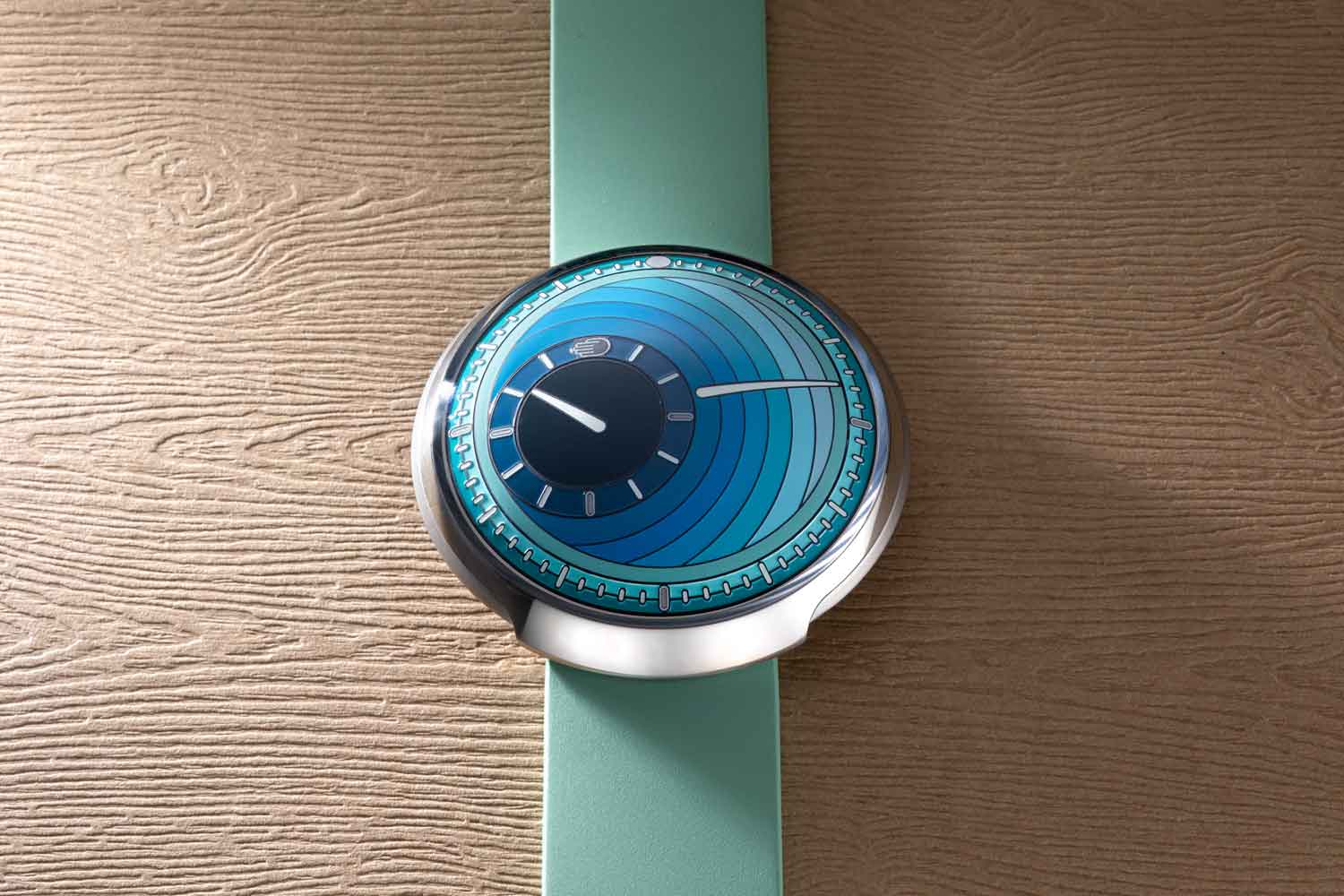
The latest Type 8 DE2 (Image: Revolution ©)
How It All Started
A Ressence may look like a smartwatch, but achieving this effect mechanically is extraordinarily complex. To understand the challenges Ressence faced, one only needs to look at the brand’s watch from 12 years ago, the Type 3 (the brand has never explained why it began with three, while the Type 1 was officially marketed and launched in 2014 — but more on that later).
Back to the Ressence Type 3. Viewed head on, this watch gives the uncanny impression that one could touch the dial as if it were a touchscreen. There seems to be almost no space between the dial and the crystal, and the dial appears to be the crystal itself. Ressence did not achieve this simply by pushing the dial upward into a curved form. Even the tiniest air gap would be visible to the human eye. But the dial cannot actually touch the crystal either, because the dial is also the indicator and any friction would make the watch unusable. So how was the illusion created?
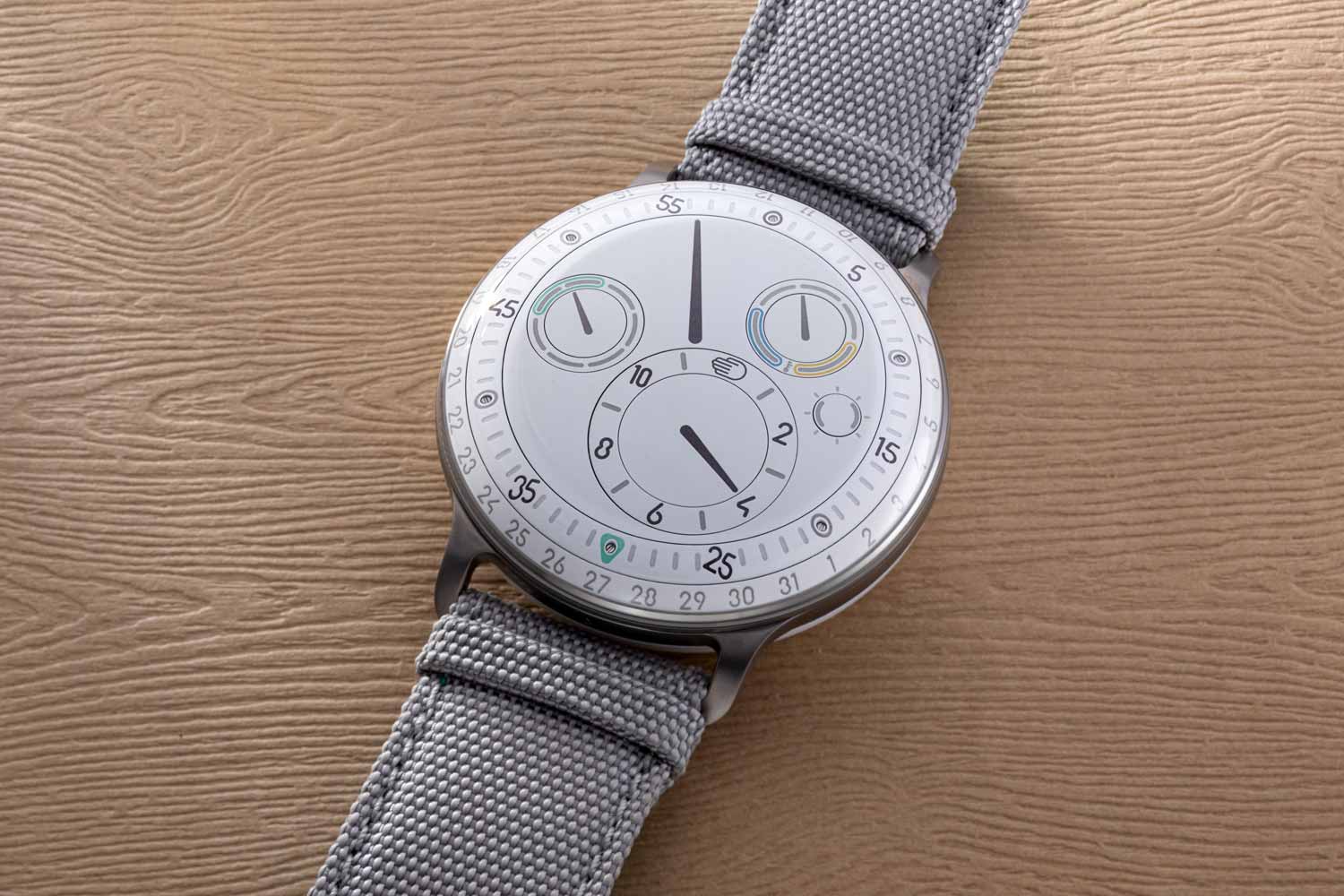
The Type 3 in stark white (Image: Revolution ©)
Think back to school science classes, when a fish in water appears closer to the surface than it really is. Refraction brings the image upward. Ressence relies on the same principle by filling the space above the dial with oil chosen for its refractive index, which matches that of the crystal. The two visually merge and the dial appears to sit flush with the surface.
This is a clever idea, but is exceptionally hard to execute. Oil cannot be allowed to seep into the movement because it would drown the balance assembly and stop the watch. Ressence therefore split the case into two fully separate chambers, the upper containing the dial and the indicators immersed in oil, and the lower housing a completely dry movement. The link between the two had to be non physical. Ressence chose magnets to transmit motion from the movement to the dial. This created a further complication because magnetism affects accuracy. The company therefore added a soft iron Faraday cage to shield the most sensitive parts of the movement.
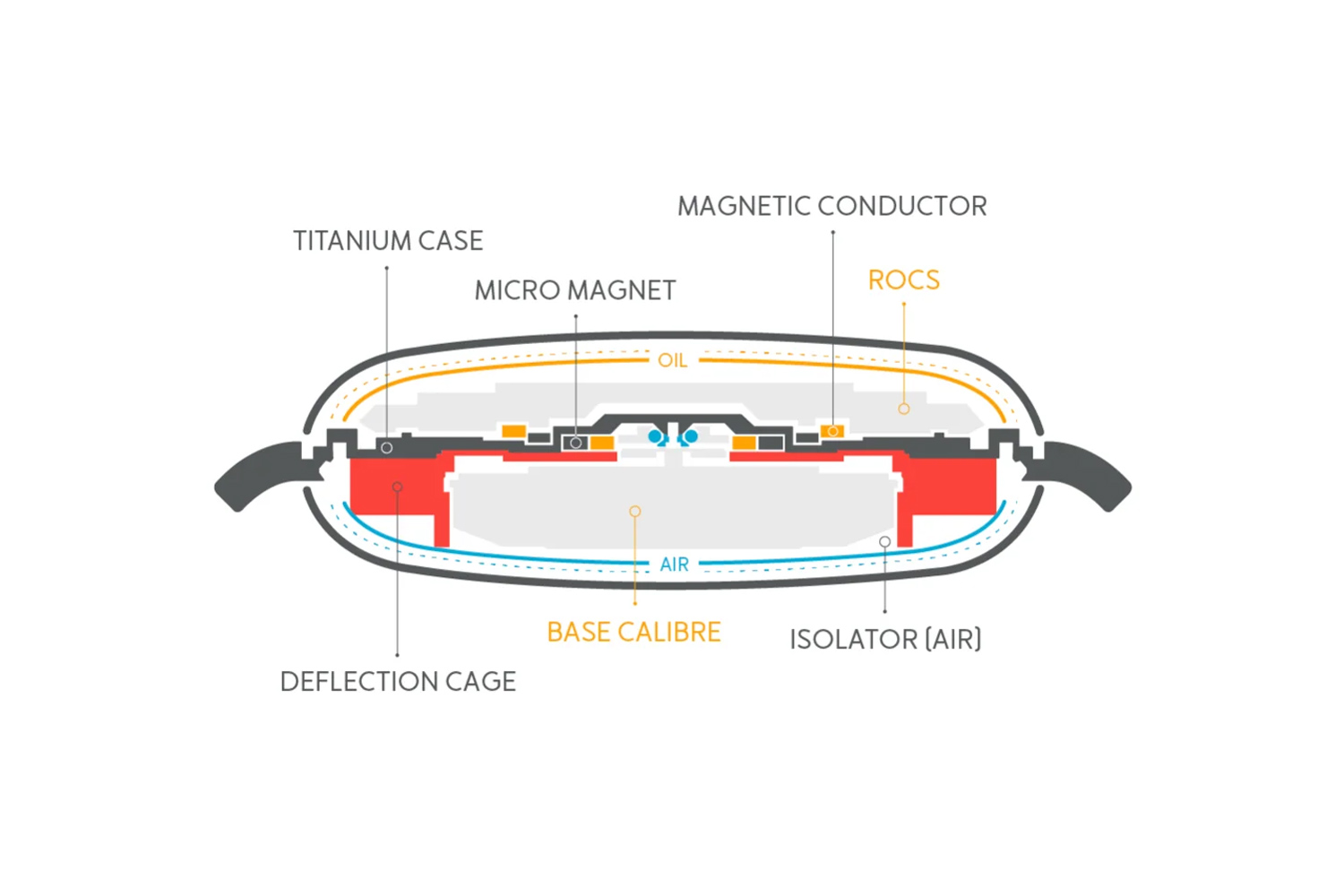
The cross-section illustrating the magnetic conduction system inside the Type 3 (Image: Ressence)
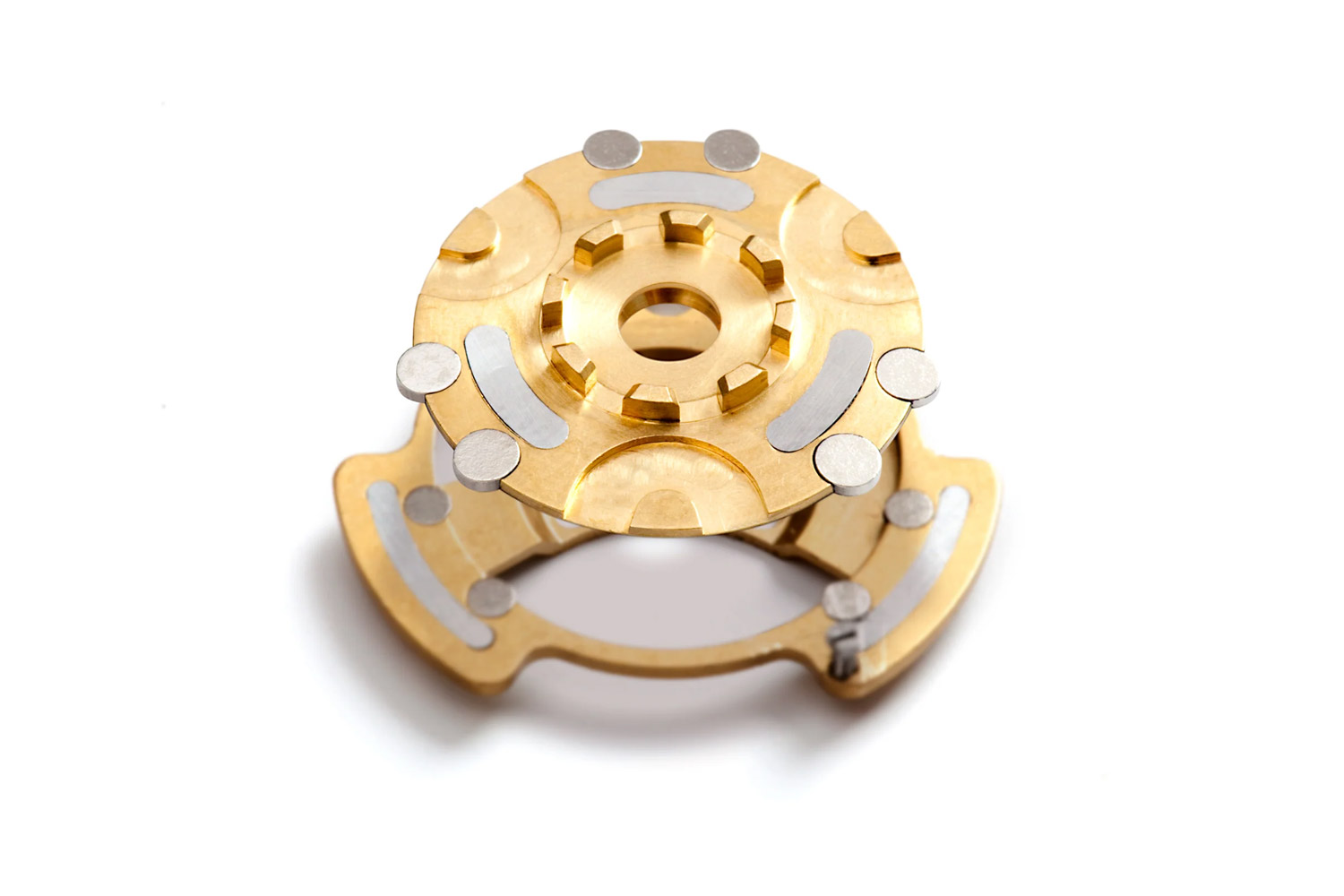
The magnetic conductor that transfers time indications from the movement to the dial without physical contact (Image: Ressence)
Once the oil problem was addressed, another difficulty remained. The satellite display on the dial is curved rather than flat. Solving this required two innovations. The first was the planetary display, in which the hour, minute and seconds-disks orbit the centre once every hour. This is driven by the company’s patented system called the Ressence Orbital Convex System, or ROCS. Planetary gears themselves are not new, but Ressence needed them to sit on an inclined plane that matches the curvature of the dial. This required slanted axes, a geometry that traditional watchmaking rarely encounters because movements are built on strict verticals.
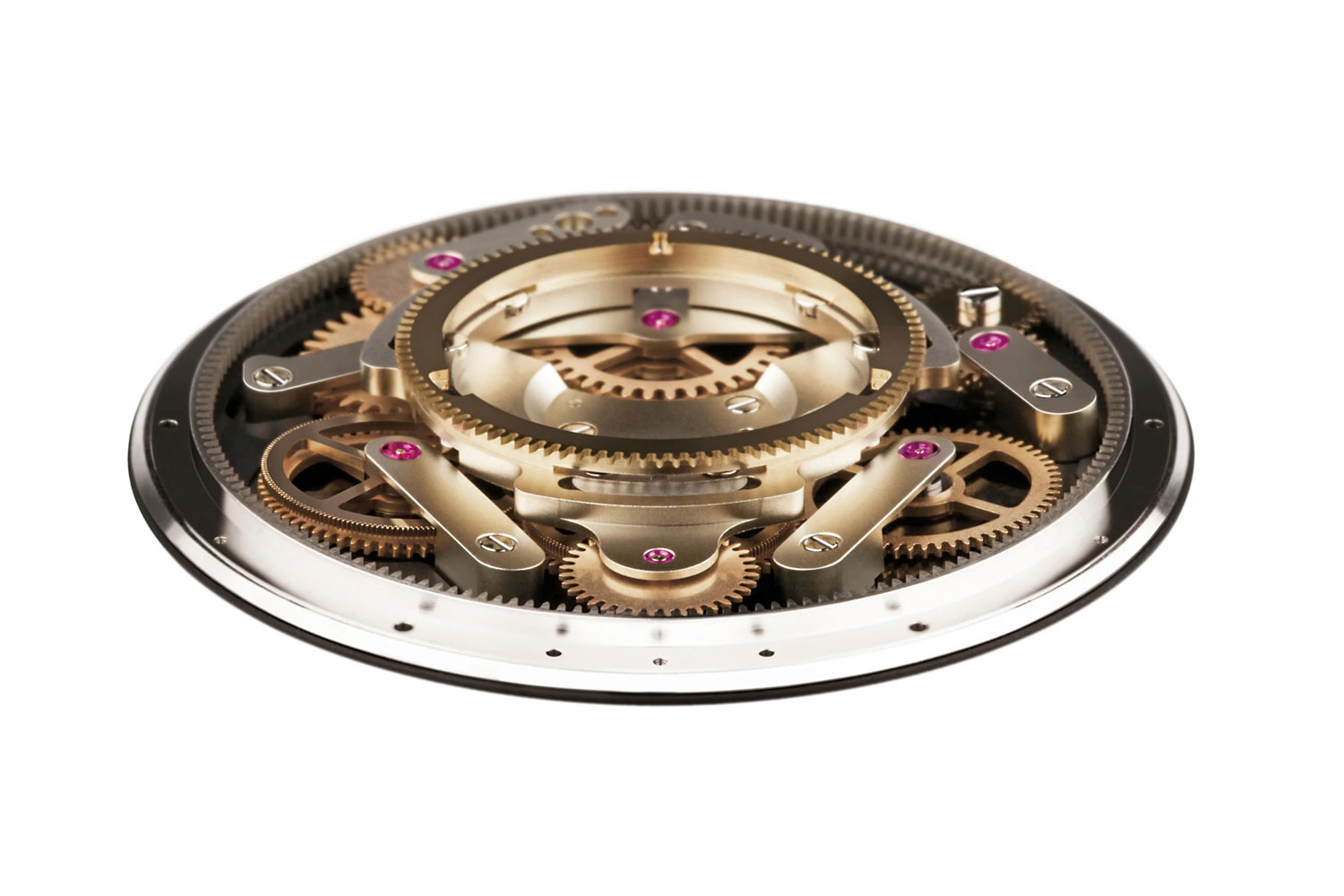
The patented ROCS module (Image: Ressence)
That Ressence managed all this is remarkable. That it was done under the direction of an industrial designer with no formal watchmaking background is more remarkable still. It is unsurprising that, so far, no one has copied it.
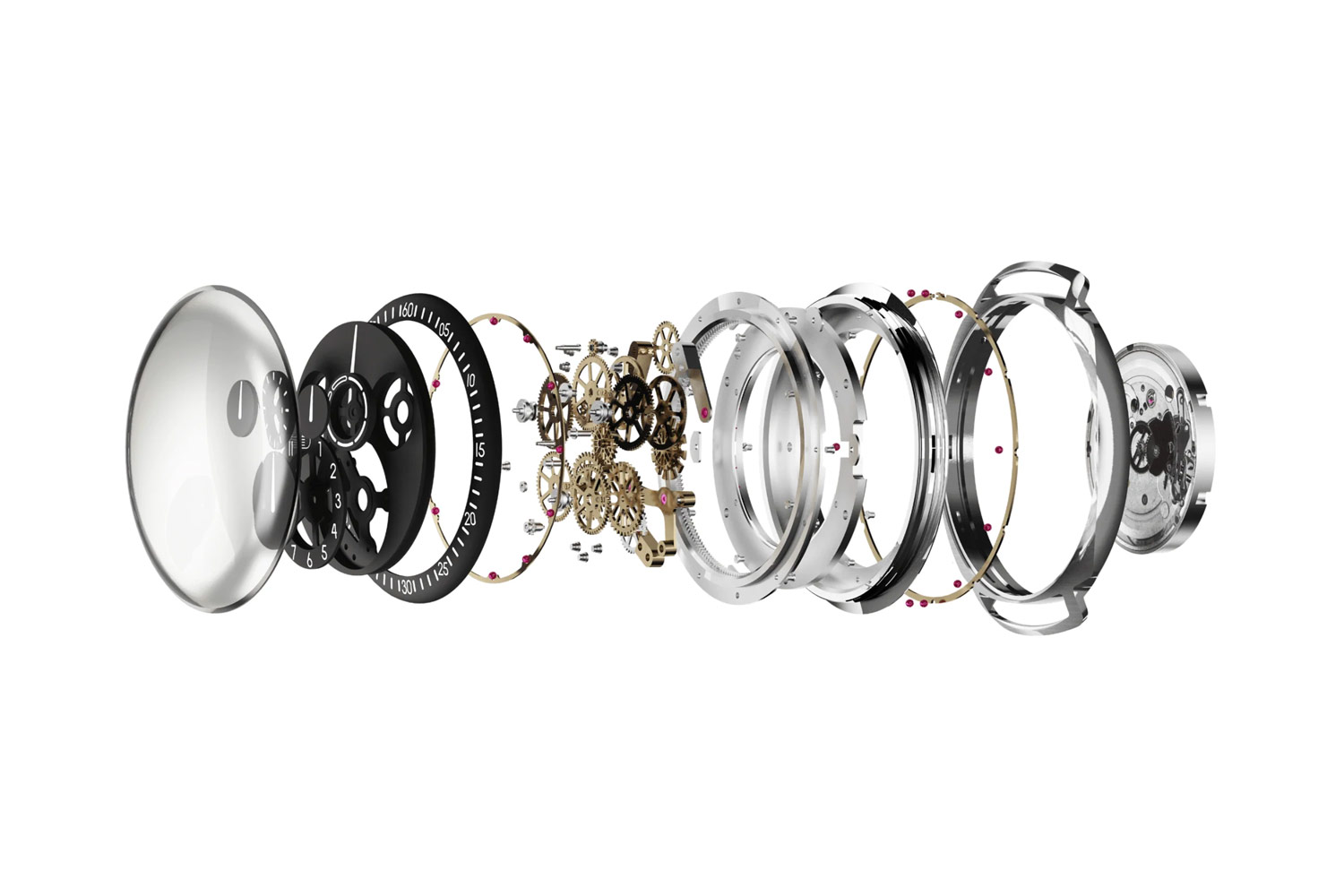
A typical Ressence in exploded view, showing the complexity of the ROCS module (Image: Ressence)
The 3 Iconic Models
A year after unveiling the Type 3, Ressence set itself the task of achieving a similar visual impact without relying on oil. The aim was to produce something more accessible to enthusiasts who admire the brand. That ambition led to the next innovative model, the Type 1.
The Type 1 succeeded because it preserved much of the Type 3’s aesthetic while dispensing with the oil-filled display and the double chamber construction. The result is a slimmer and more wearable watch, only 11 millimetres thick. More importantly, it retains the ROCS mechanism, which enables the planetary display of time. This is no small achievement. It demonstrates that Ressence can preserve its most recognizable identity while moving towards a more affordable offering, a long term vision of Mintiens that we will return to later.
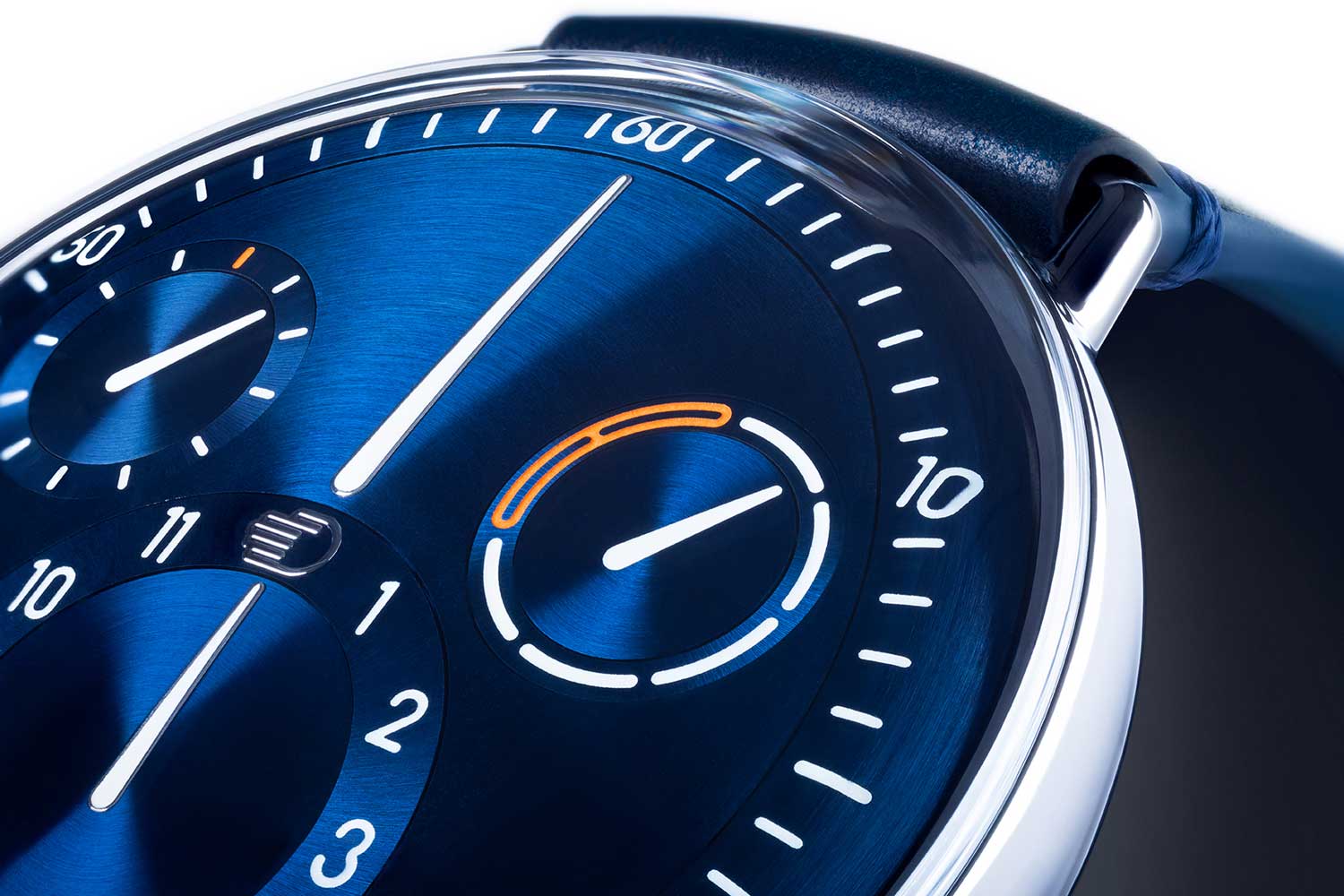
The Type 1 in blue (Image: Ressence)
Beyond the Type 3 and Type 1, the earliest models that defined Ressence, another landmark watch deserves mention. Together these three form what we see as the brand’s foundational and most iconic pieces. This watch is the Type 5.
The Type 5 is both unexpected and entirely logical. It is unexpected because it stands as the only true dive watch produced by an independent watchmaker, a category that excludes microbrands. Yet it is logical because it returns to the oil-filled display that lifts the indicators to the surface of the crystal. Under water, this eliminates the distortion that afflicts conventional dive watches with thick crystals, making the dial legible from a wide range of angles. The watch is fully “lumed,” whereas many dive watches lack a luminous bezel, so its practical intent is clear. It illustrates how Ressence’s design language is not only visually distinctive but also technically purposeful, allowing the brand’s engineering to serve genuine functional needs.
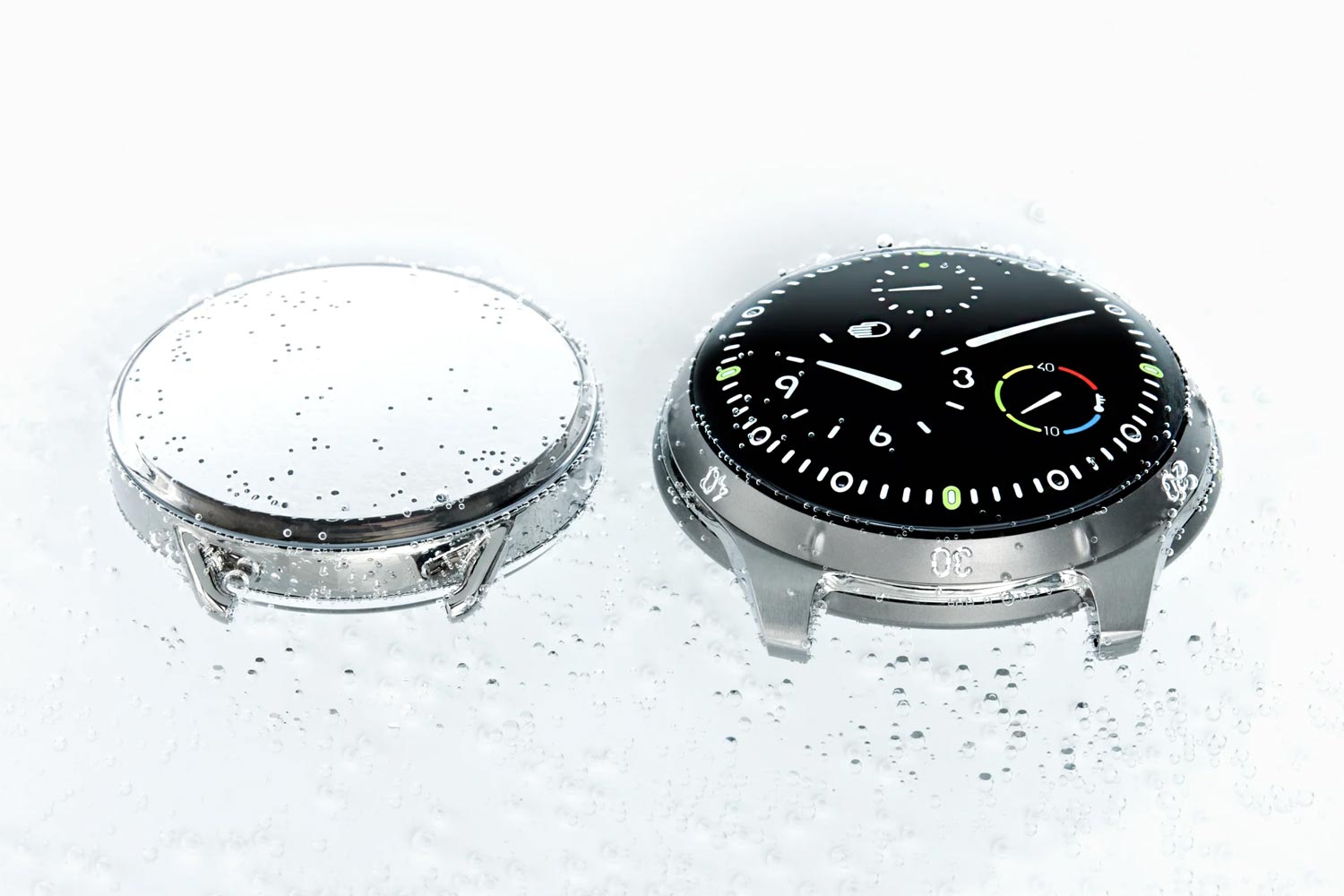
The landmark Type 5 (Image: Ressence)
The Type 5 is rated to 100 metres of water resistance, modest by the standards of professional dive watches but a substantial leap from the ten metre rating typical of other Ressence models. It shows that the brand can produce highly water resistant watches when the concept demands it.
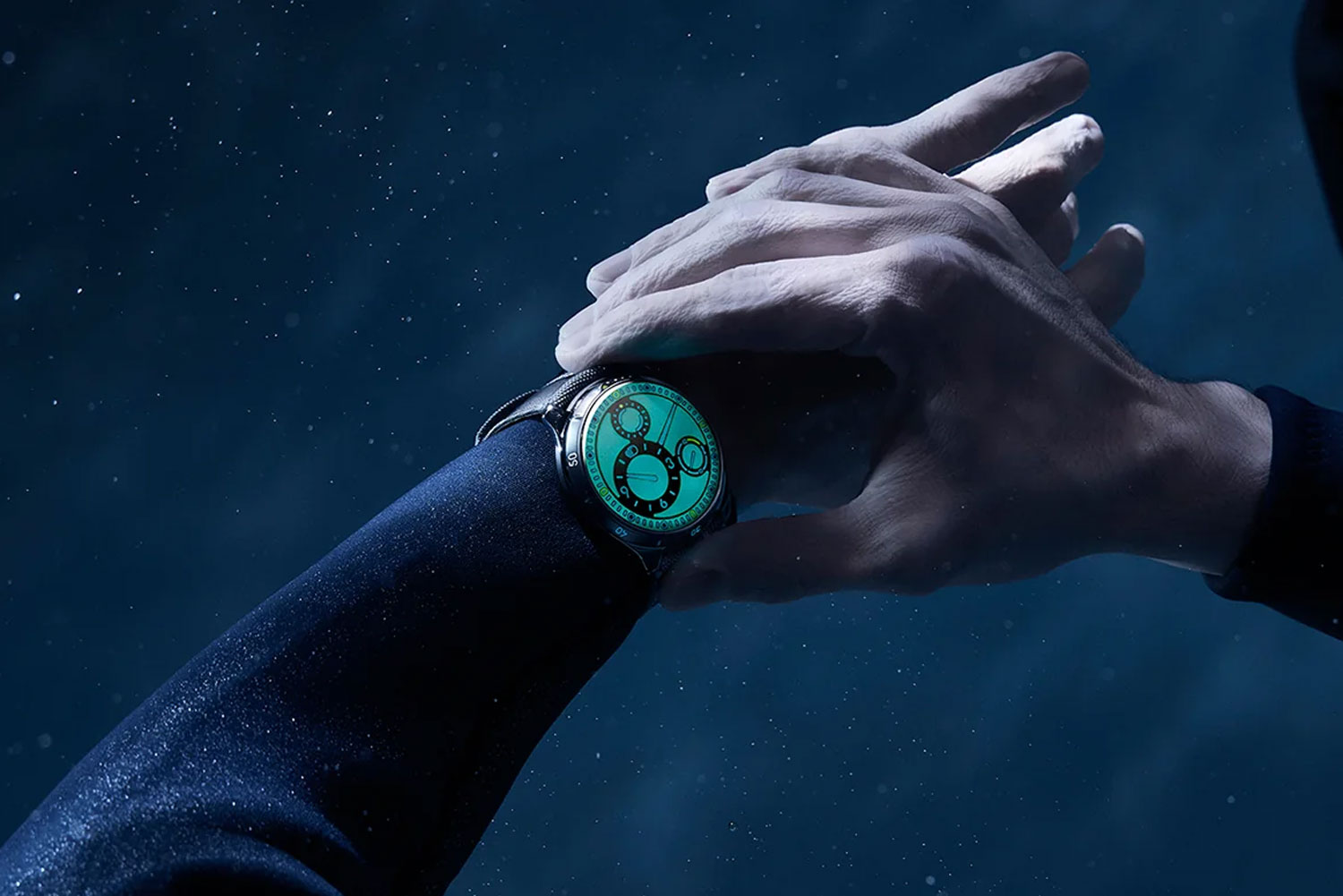
The Type 5 in its natural habitat (Image: Ressence)
Ambition for Accessibility
The three iconic models mentioned above are alluring, but they represent complex feats of engineering that demand significant time and labour. As a result, they are priced beyond the reach of many watch enthusiasts, particularly since Ressence lacks the economies of scale that might amortise such costs. Mintiens has noted in several interviews that his long term vision is to produce a model around 10,000 dollars, allowing a broader audience to enjoy a Ressence.
He has also been clear that achieving such a price requires subtraction. A watch cannot sit at the top of the range and simultaneously cost a fraction of the usual price (which has since increased). What was surprising, however, was how well this subtraction was executed. The simplification did not feel like a loss. That was precisely the impression when the Type 8 appeared in 2022. I saw it at Watches and Wonders, tried it on alongside several of the brand’s established models and it immediately became my favourite Ressence.

The inaugural Type 8 in blue (Image: Ressence)
The Type 8 appeals because of its simplicity. It shows only hours and minutes, which gives the dial an unusually clean composition. It is more streamlined than any previous Ressence, with generous negative space that lends it a more contemporary character. The simplicity also allows the watch to be thin and exceptionally wearable. With almost no lugs and a fully domed profile, crystal and dial included, it sits on the wrist like a small, polished pebble. Made from titanium, it weighs only 42 grams including the strap and buckle.
In many ways, the Type 8 feels like a successful distillation of the essence of Ressence. It is one of the rare examples of a brand creating an entry-level watch that is as compelling as its higher-end pieces, if not more so. It is really a design and philosophical feat, beyond simply making the watch more accessible to everyone.
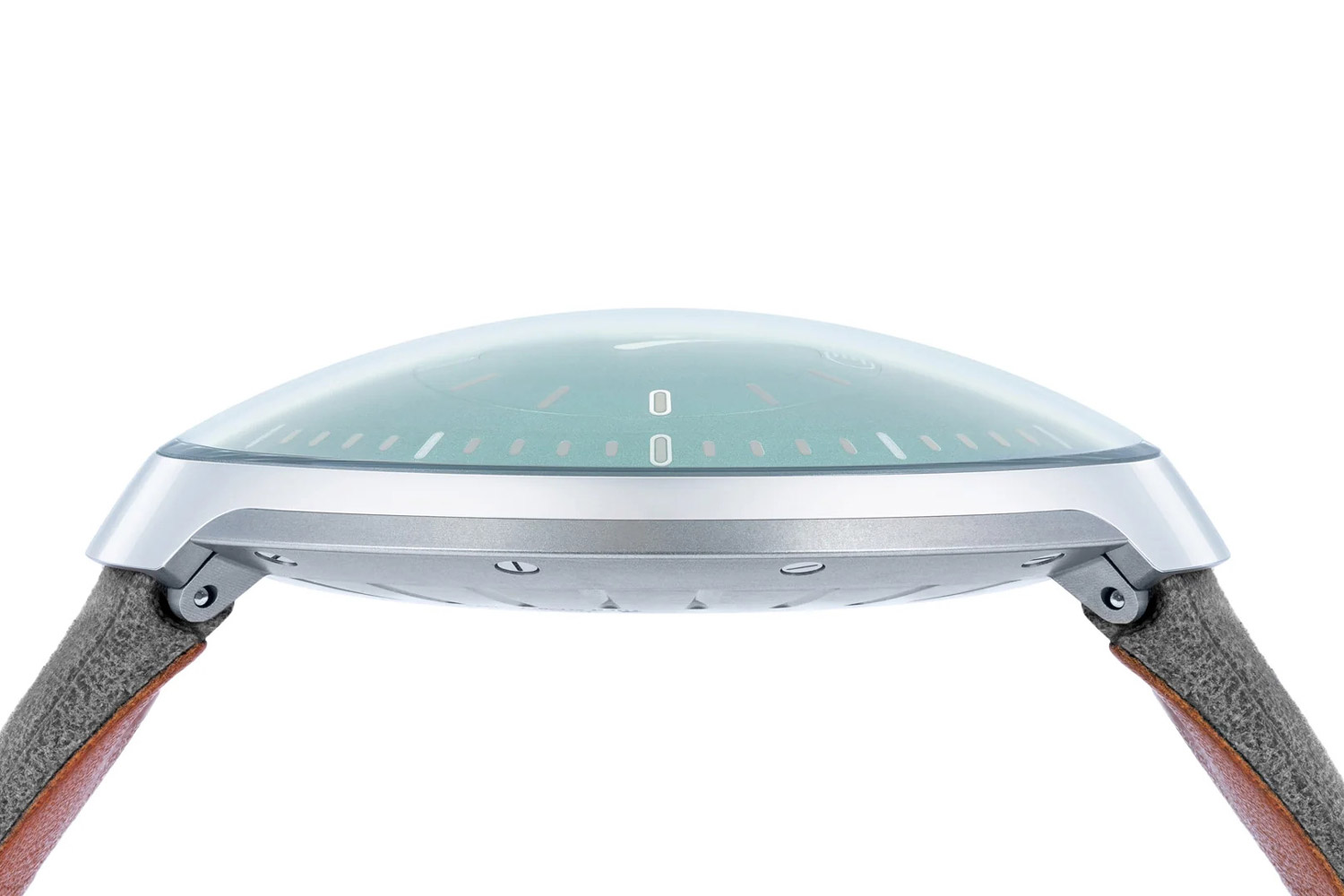
Side view of the Type 8 (Image: Ressence)
Colourful Show on the Type 8 DE
While the Type 8 is attractive because the dial is clean and sparse, that empty real estate also invites creative expression. Three years after the original Type 8 was launched, Ressence has finally found the right artist to decorate the dial, and the result is so striking that it feels worth the wait.
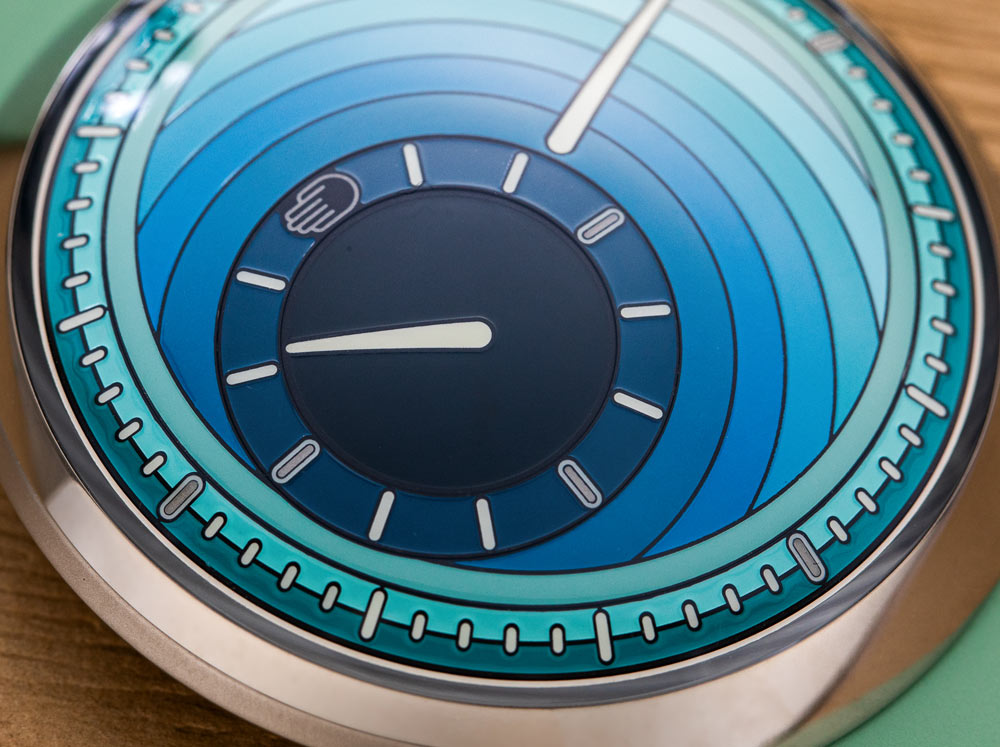
Ressence turned to the German sculptor and artist Daniel Engelberg, whose well-known Inside Out series features colourful rings that shift from light to pitch black, creating optical illusions that change with the viewer’s perception. That very idea is recreated on the Type 8 DE, where the empty dial has been filled with concentric rings of colour. The Type 8 DE1 uses shades of pink to accent the blue-green ring, while the Type 8 DE2 uses a full blue-green or turquoise palette.
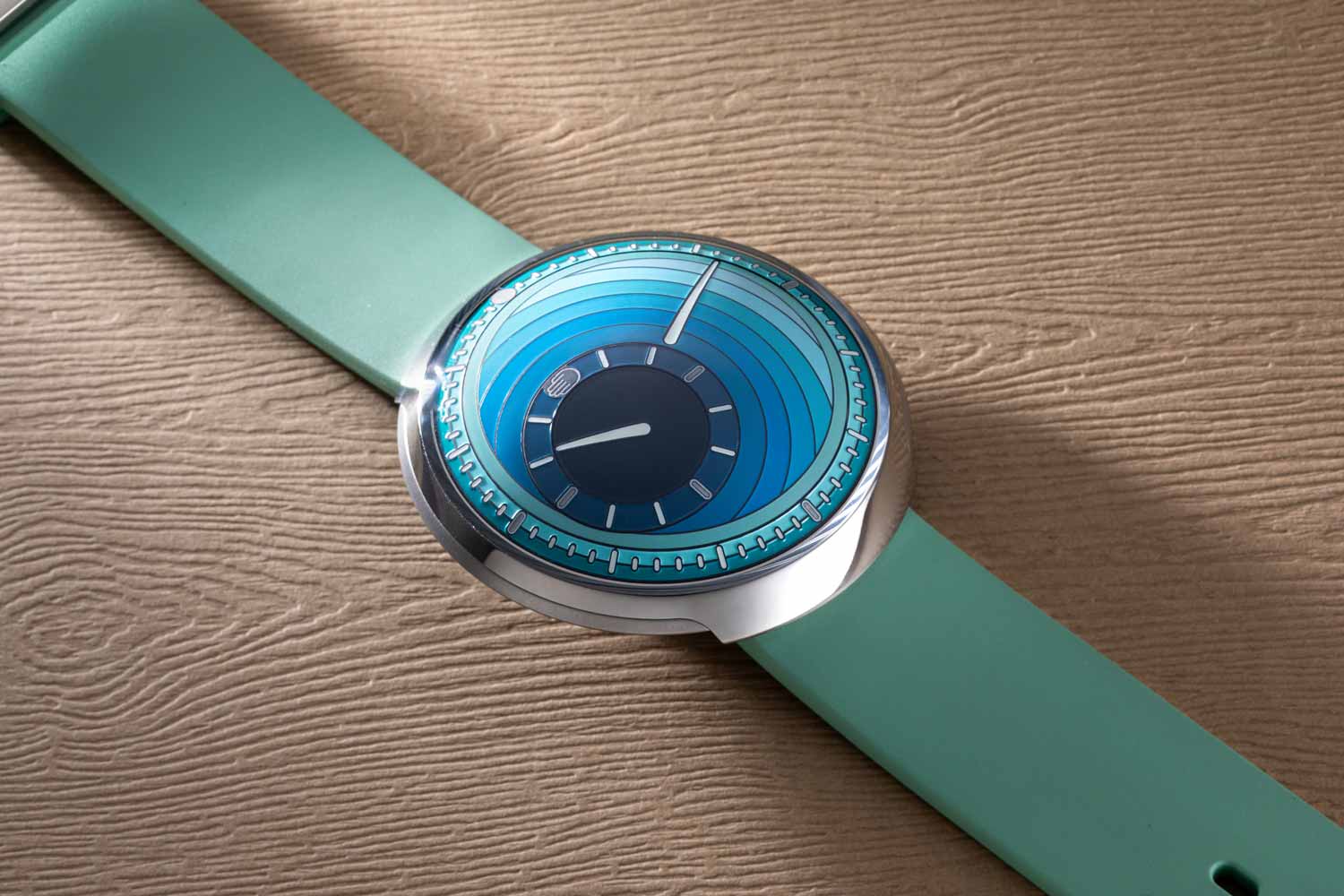
The Type 8 DE2 (Image: Revolution ©)
The lacquer work on the dial is beautiful in its own right, but the real magic lies in the fact that the dial rotates once every hour, bringing the artwork to life. When setting the time, the wearer can rotate the dial quickly and watch the coloured rings whirl, which is a remarkable effect. It is a satisfying collaboration because it highlights the strengths of both parties, and in the words of Mr Engelberg, the Type 8 is the perfect canvas for his work. “For the first time, I have a work of art that is animated. It is as if the art comes alive every minute,” he said.
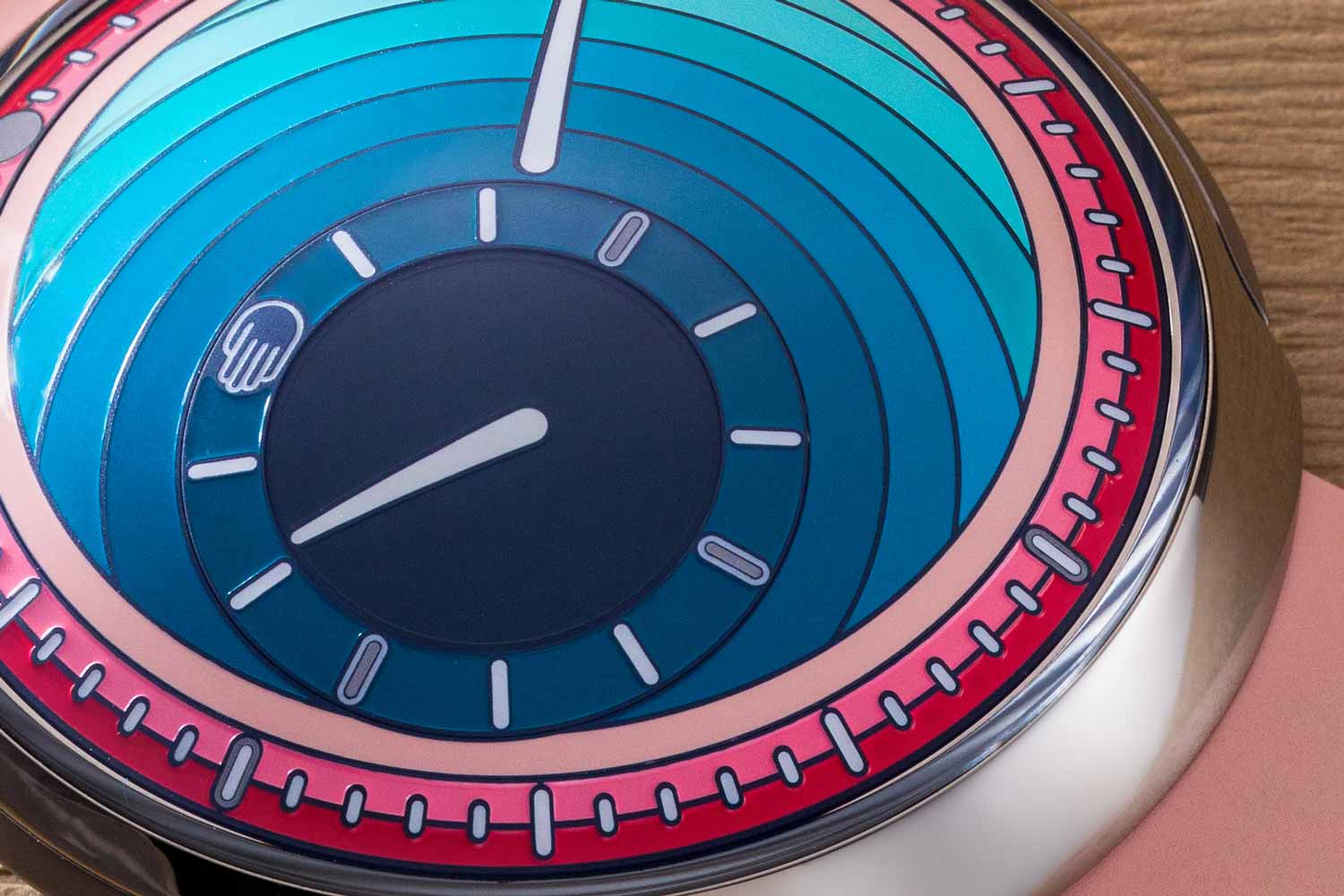
Striking colours on the Type 8 DE1 (Image: Revolution ©)
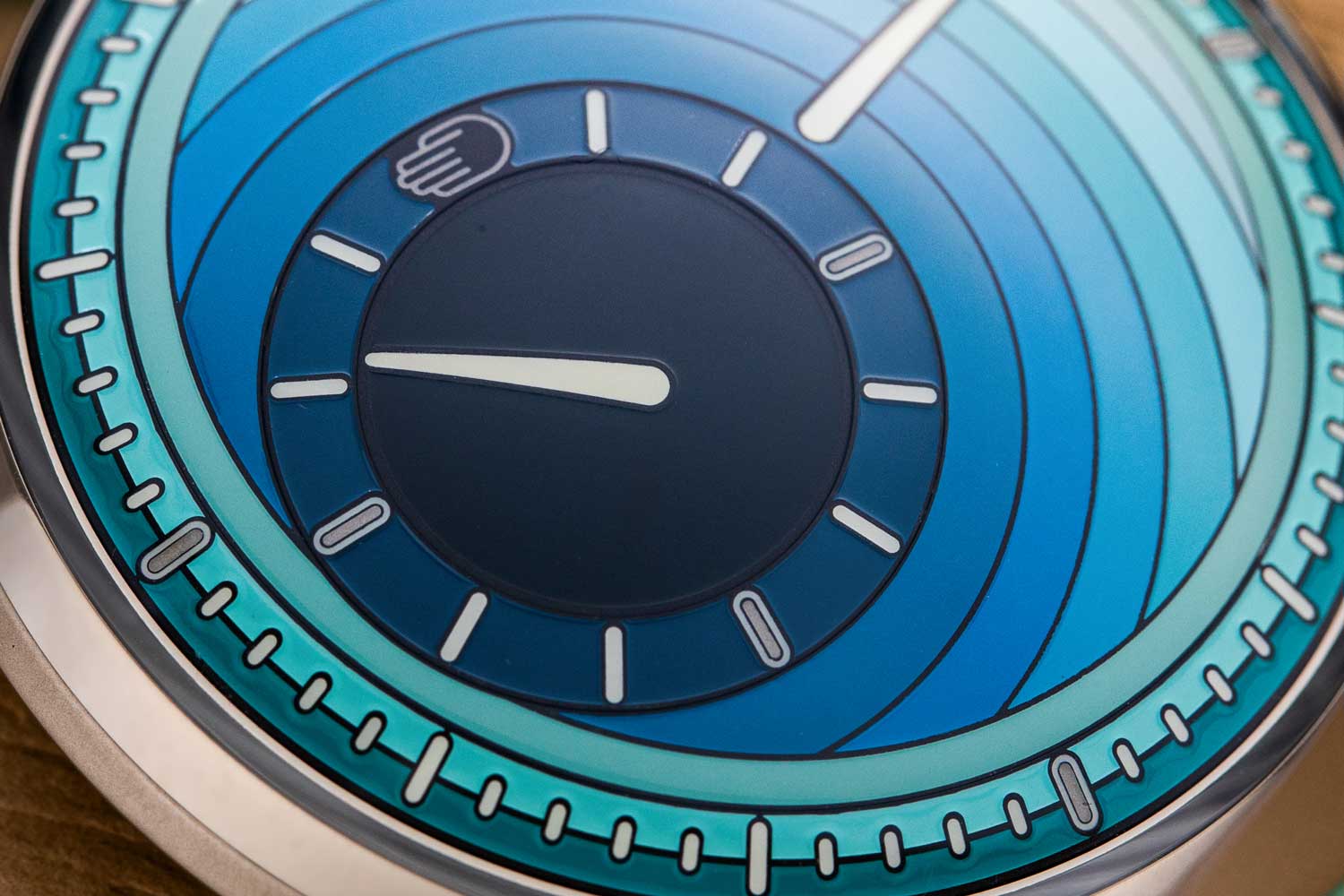
Close-up view of the beautiful artwork (Image: Revolution ©)
As usual, the case is polished Grade 5 titanium, and the bezel and lugs are so slim they are almost non-existent, which makes the dial appear wide, bright and domed, like wearing a piece of candy or art on the wrist. There is no crown on the side because it has been moved to the back to preserve the clean symmetry of the front. Setting the time and winding are done by turning the titanium case back, which is brushed for grip rather than polished.
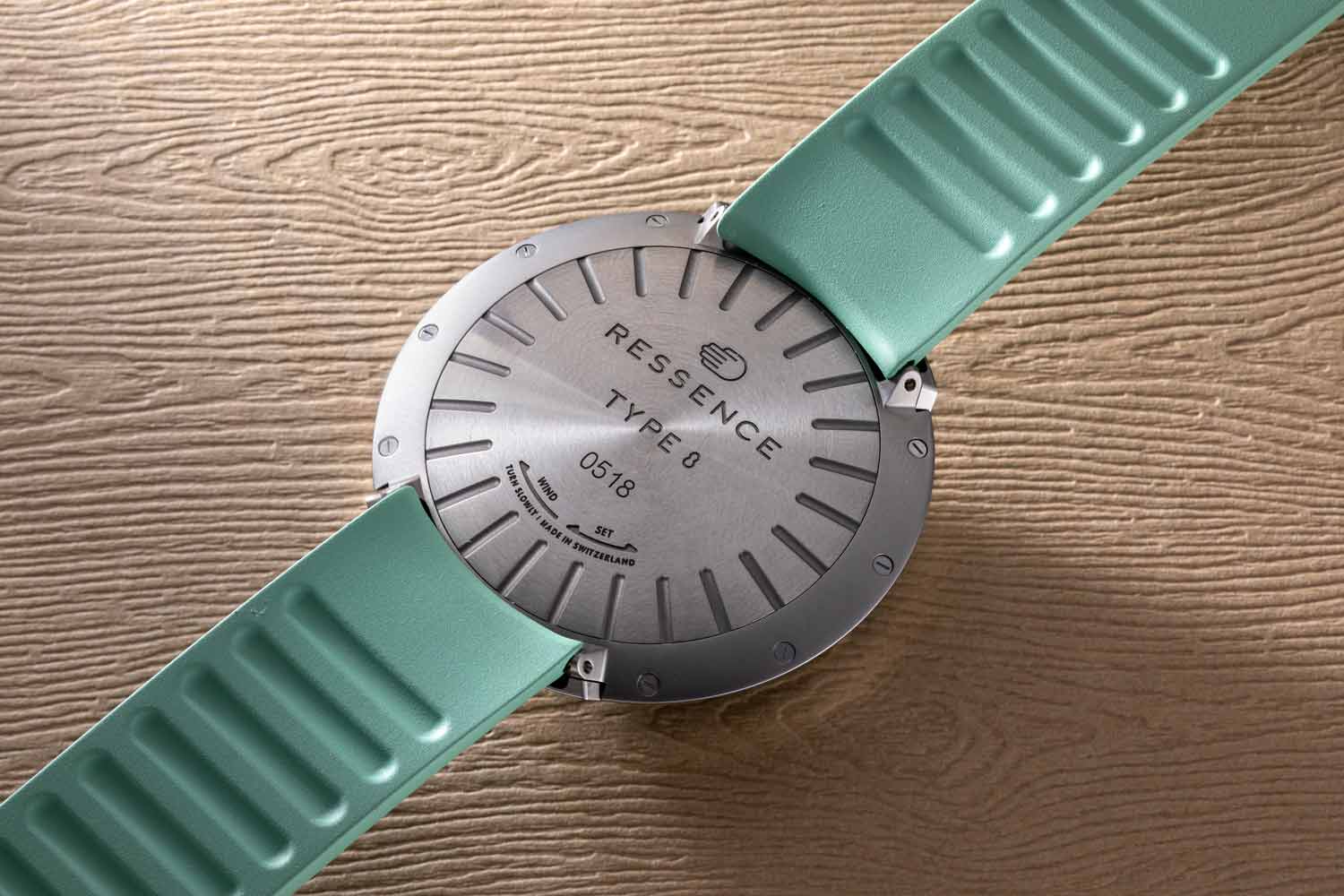
The large crown on the caseback (Image: Revolution ©)
Concluding thoughts
Ressence occupies a unique place in watchmaking. It may well be the only mechanical watch brand that truly embraces the digital spirit of the 21st century. It will be remembered for its contemporary look and for the way that look is achieved through classical, traditional mechanics that have been rethought and reengineered from the ground up. It is an impressive achievement.
It is also heartening to see the brand come full circle in its renaissance of the essence, using meaningful subtraction to arrive at the minimalist and more affordable Type 8, a watch that is surprisingly as attractive as the brand’s more expensive creations. And now the story has taken another step forward. The minimalist dial, with its clever planetary display, has become a canvas for art, decorated with concentric circles in vibrant colours that brighten the watch and, in a small way, brighten our days as they turn.
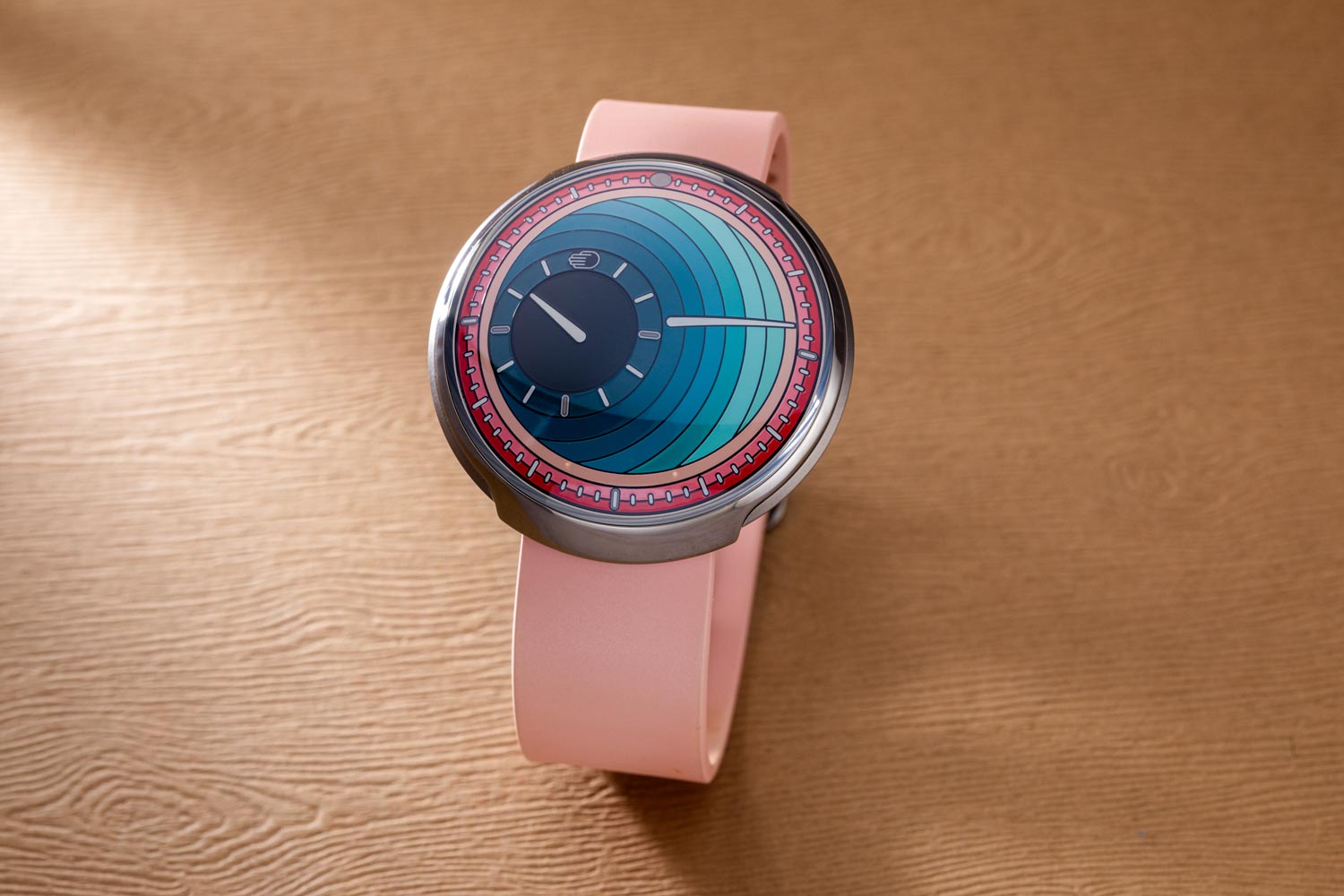
The Type 8 DE1 (Image: Revolution ©)
Tech Specs: Ressence Type 8 Daniel Engelberg Ref DE1 (pink); DE 2 (turqoise)
Movement Self-winding caliber, featuring the patented ROCS 8 module integrated with a base ETA 2892; 36-hour power reserve
Functions Hours and minutes
Case 42.9mm x 11mm; Grade 5 titanium; splash resistant
Dial Convex Grade 5 titanium with eccentric satellites; engraved indications filled with Super-LumiNova
Strap Pink or blue-green rubber strap with pin buckle in Grade 5 titanium; additional blue leather
Price USD 22,500
Availability Limited edition of 40 pieces per colour
Ressence
You may also like
Editorial
Ressence and Marc Newson Reimagine the TYPE 3 in a Landmark Design Collaboration
Dec 4, 2025
Editorial
Ressence and Marc Newson Reimagine the TYPE 3 in a Landmark Design Collaboration
Dec 4, 2025
Editorial
Independent spirits: Seddiqi’s 75th Anniversary limited editions
Nov 17, 2025
Editorial
Independent spirits: Seddiqi’s 75th Anniversary limited editions
Nov 17, 2025
News
Ressence And The Armoury Team Up To Create A Salmon-Dial TYPE 9 For The Sartorial Collector
Sep 10, 2025
News
Ressence And The Armoury Team Up To Create A Salmon-Dial TYPE 9 For The Sartorial Collector
Sep 10, 2025