An Artistic Evolution
Limited Edition
An Artistic Evolution

The watch you are looking at is the result of almost three years of collaborative back and forth with independent watchmaking legend Bernhard Lederer. When I first set eyes on the movement of Lederer’s Central Impulse Chronometer, I was simultaneously enamored with the stunning architectural symmetry of his movement, his successful implementation of George Daniels’ Independent Double Wheel Escapement and his brilliant use of two remontoirs d’égalité — one on each of the two trains feeding energy to the escape wheels.
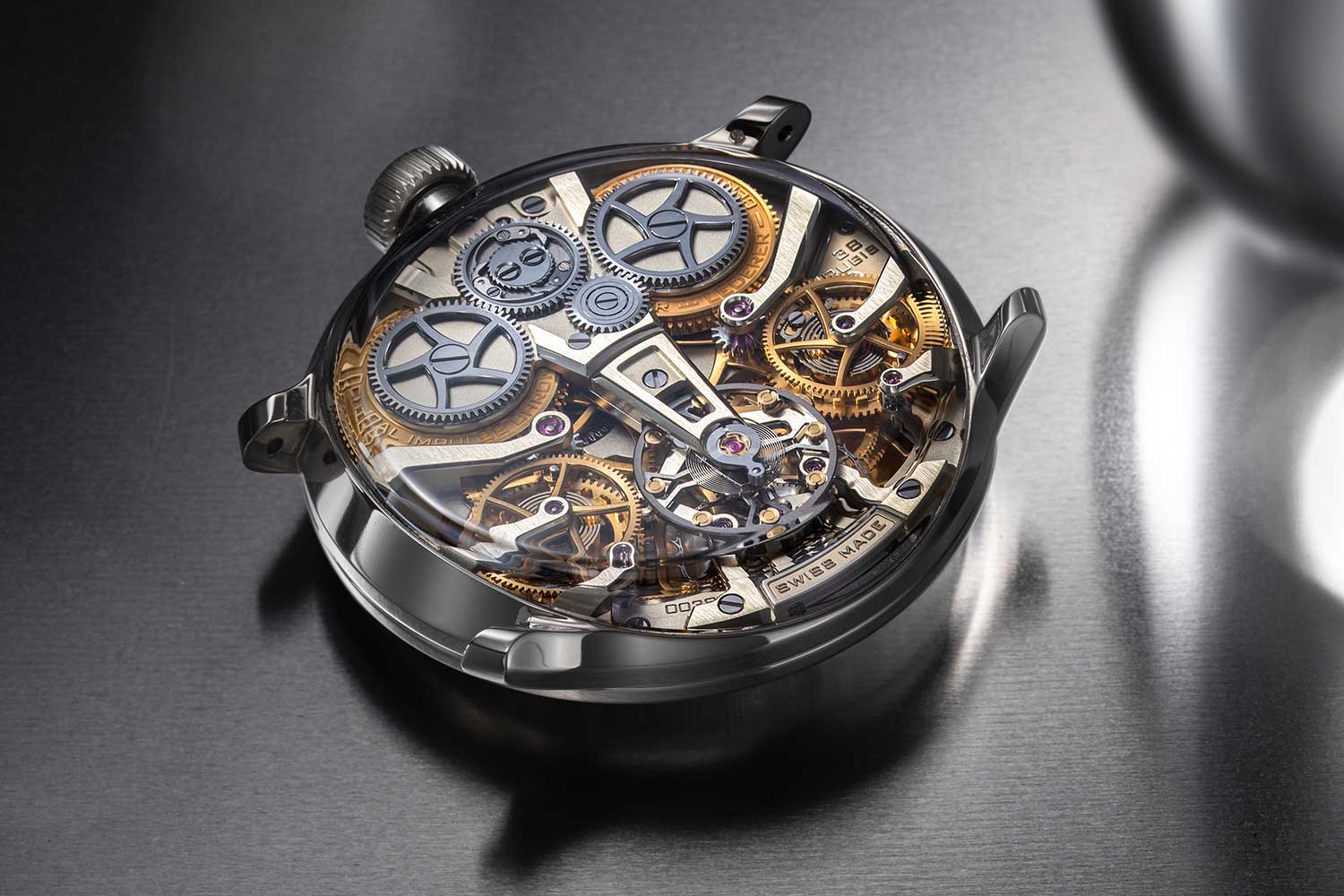
Lederer CIC 39 “Eddy Jaquet & Yann von Kaenel” for Revolution (©Revolution)
Immediately, I began dreaming of a possible collaboration with him, which he and his wife Ewa, who is also his business partner, agreed to. The only caveat — as I was told — was that our watch would necessitate a lot of waiting. I’m talking about Gabriel García Márquez’s Love in the Time of Cholera levels of seemingly endless wait.
But today, I am overwhelmed with delight to finally present to you the fruit of our collective labor: a limited edition of Lederer’s 39mm Central Impulse Chronometer, replete with two 15-second remontoirs, equipped with his proprietary crown wheel mechanism, and featuring what I consider to be one of the most ravishing dials in all of watchmaking.
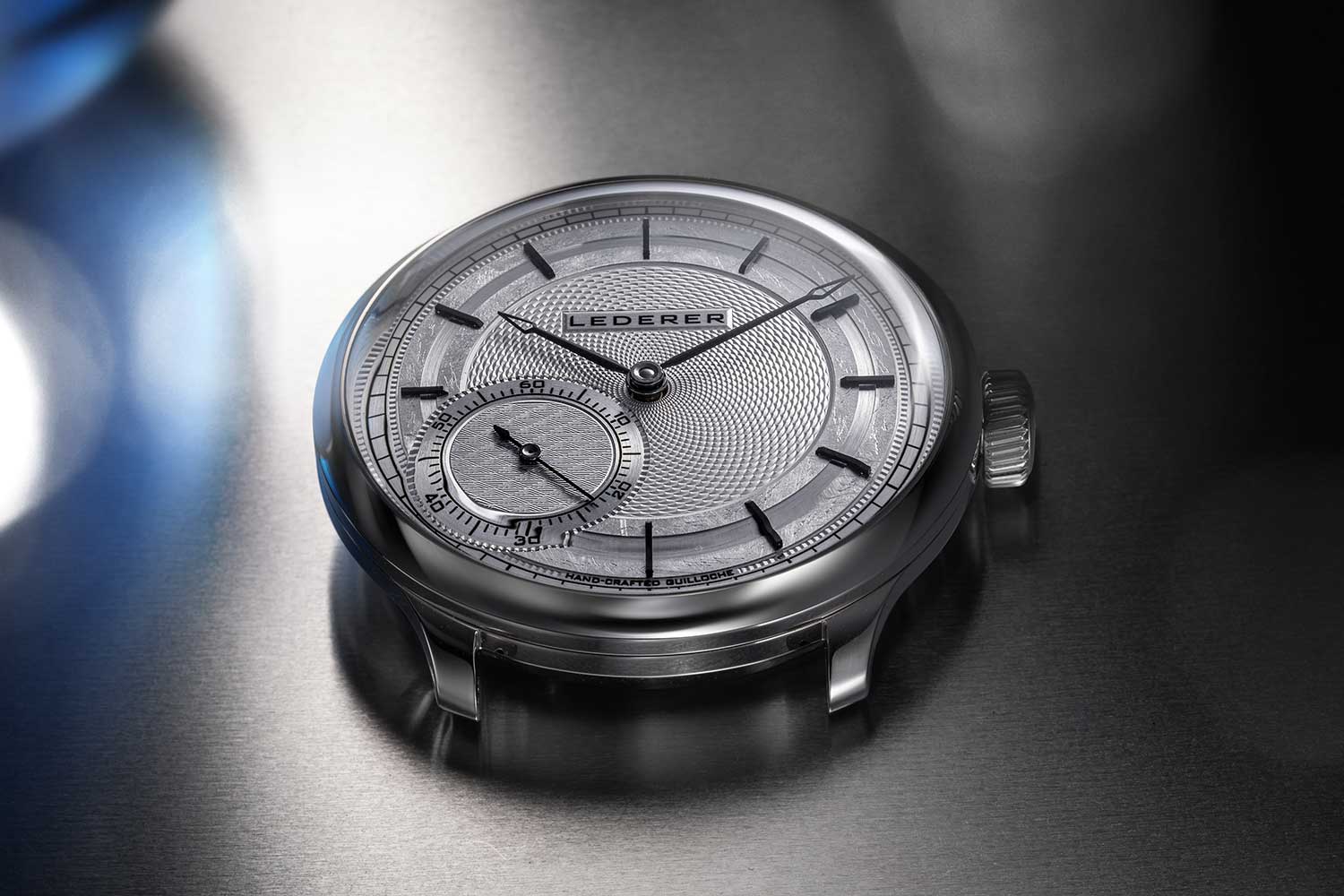
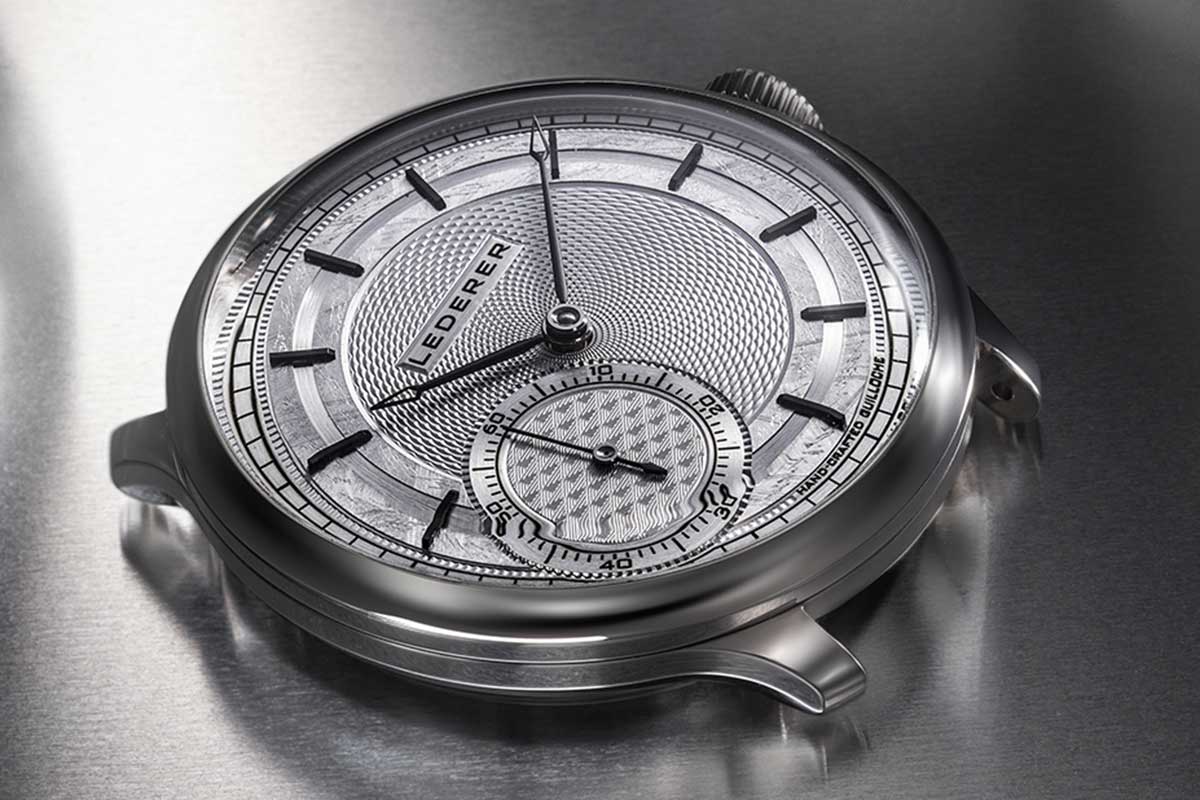
Yann von Kaenel and Jaquet Eddy used guilloché à main that incorporates both rose-engine and straight-line machines, as well as hand engraving (©Revolution)
This stunning monochrome masterpiece is the work of two incredible craftsmen. The first is Yann von Kaenel, a guilloché master based in Neuchâtel — you may know him as the artisan who designed the much-improved Audemars Piguet Code 11.59 with guilloché dials. The other is a master engraver who won the Artistic Crafts Watch Prize at the 2021 Grand Prix d’Horlogerie de Genève for his collaboration with MB&F. His name is Eddy Jaquet. Together, von Kaenel and Jaquet have crafted one of the ultimate expressions of métiers d’art in dial making. Using guilloché à main that incorporates both rose-engine and straight-line machines, as well as hand engraving, they have created the stunning impressionist-style gratté pattern that unfolds in stunning nuances of light and shade across the dial.

Bernhard Lederer
-

- Yann von Kaenel
-

- Eddy Jaquet (© Piotr Stoklosa, 2024)
The reason our limited edition took so long to see the light of day is that we first had to wait for Lederer to launch his smaller-sized Central Impulse Chronometer. This is far more than a reduced-size timepiece; it features an entirely new movement with an improved remontoir system.
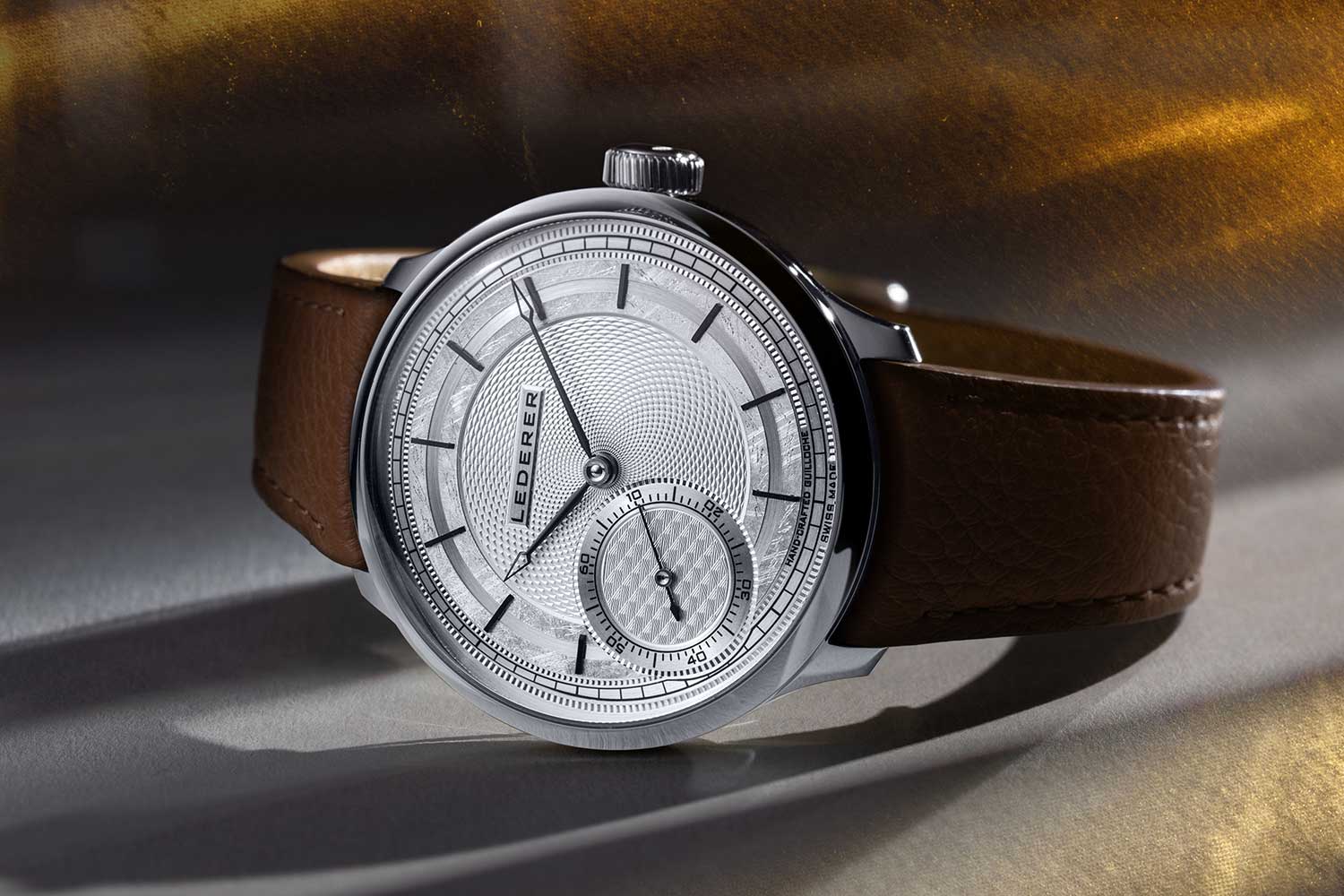
Lederer CIC 39 “Eddy Jaquet & Yann von Kaenel” for Revolution (©Revolution)
Like many other watchmakers, Lederer initially used Robert Gafner’s Reuleaux triangles for his constant force mechanisms. In the larger 44mm version, the remontoirs recharged every 10 seconds, staggered to deliver a regular impulse to the balance. In the 39mm version, he has evolved the system so that the two 15‑second remontoirs are now wound via a crown wheel mechanism of his own design, staggered to overlap and provide a smoother, nearly continuous supply of energy to the escapement. (At this point, I should mention that Lederer personally dislikes using the term “constant force mechanisms” to describe movements with remontoirs d’égalité, as they still have a minimal delta in force delivery. However, as these terms have been used interchangeably in watchmaking, with apologies to him, I will be following this usage throughout this article.)
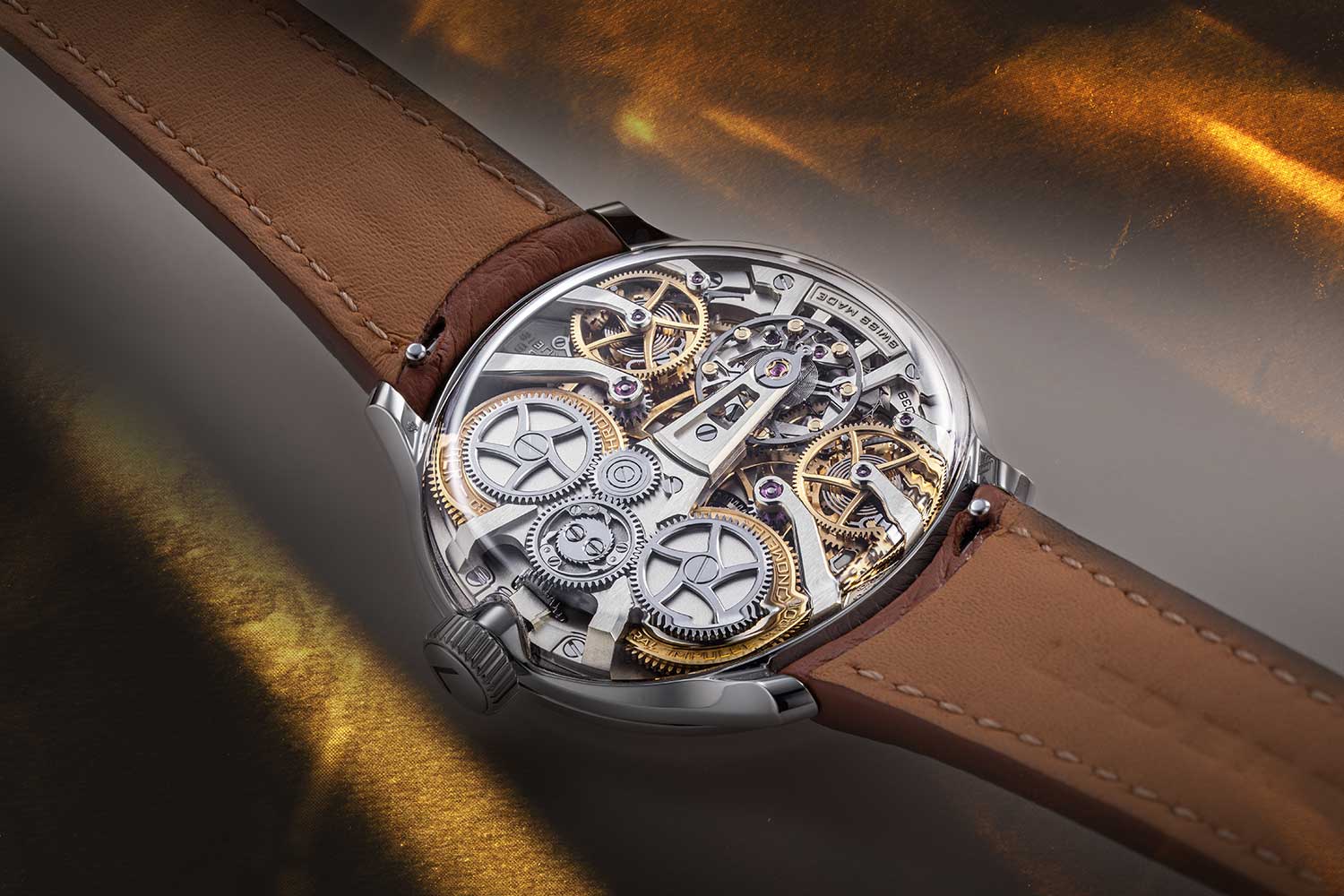
Lederer CIC 39 “Eddy Jaquet & Yann von Kaenel” for Revolution (©Revolution)
The Genesis of the Central Impulse Chronometer
One of the reasons I love the Central Impulse Chronometer so much is that it is Lederer’s love story to watchmaking and a paean to his hero George Daniels. The year is 1981. Imagine a teenage Bernhard Lederer, with shoulder length hair hitchhiking from Germany to London just to be able to buy a copy of Daniels’ tome Watchmaking. Lederer explains, “I stood in the rain for one day before someone would pick me up. But I was determined to own this book.” Of Daniels’ innumerable contributions to watchmaking, one that fascinated Lederer was his Independent Double Wheel Escapement, which Daniels had implemented in pocket watches like the legendary Space Traveller. This escapement, Lederer quickly understood, was Daniels’ attempt to solve the weaknesses he saw in Breguet’s natural escapement.
-
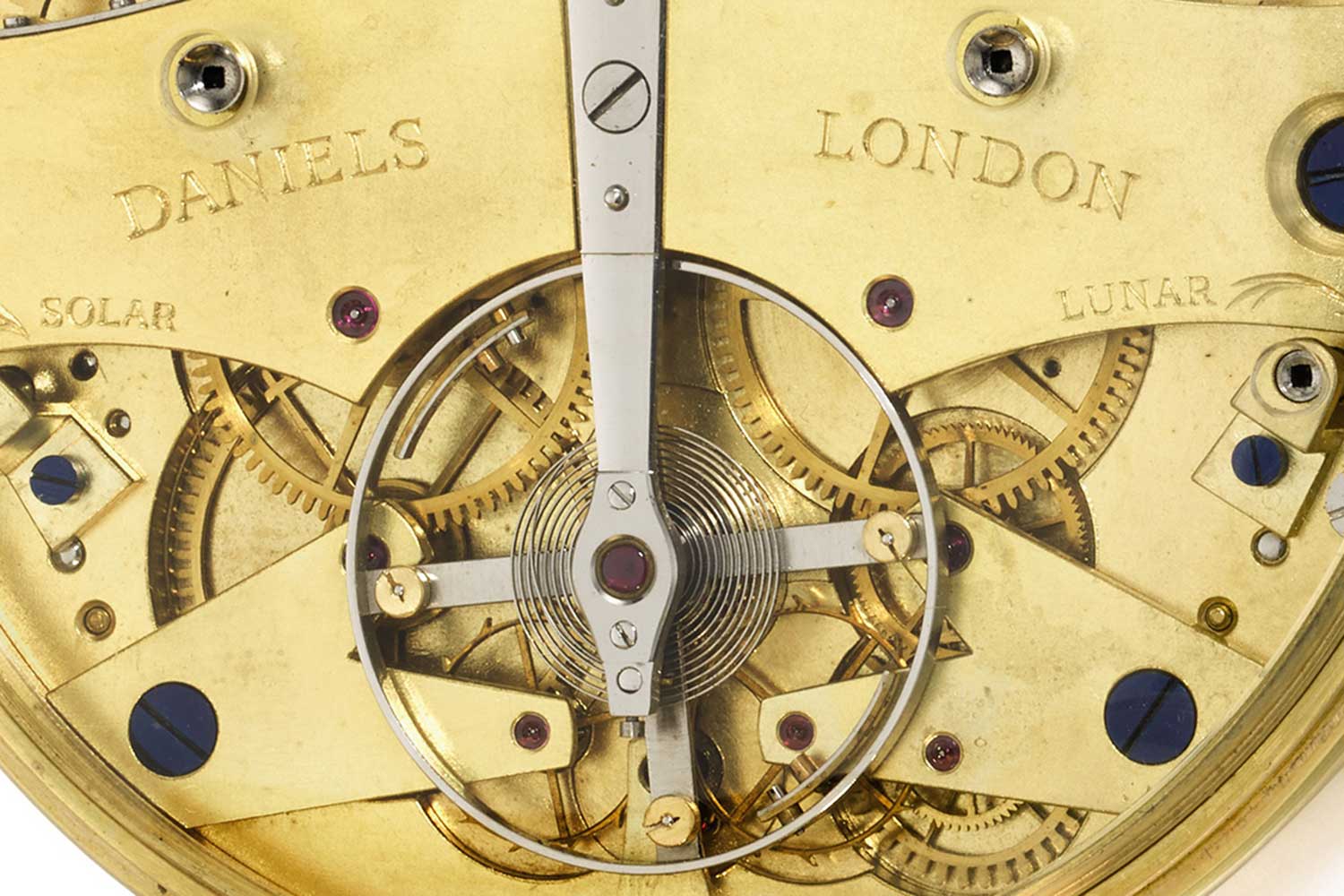
- The double-wheel chronometer escapement in the Space Traveller
-
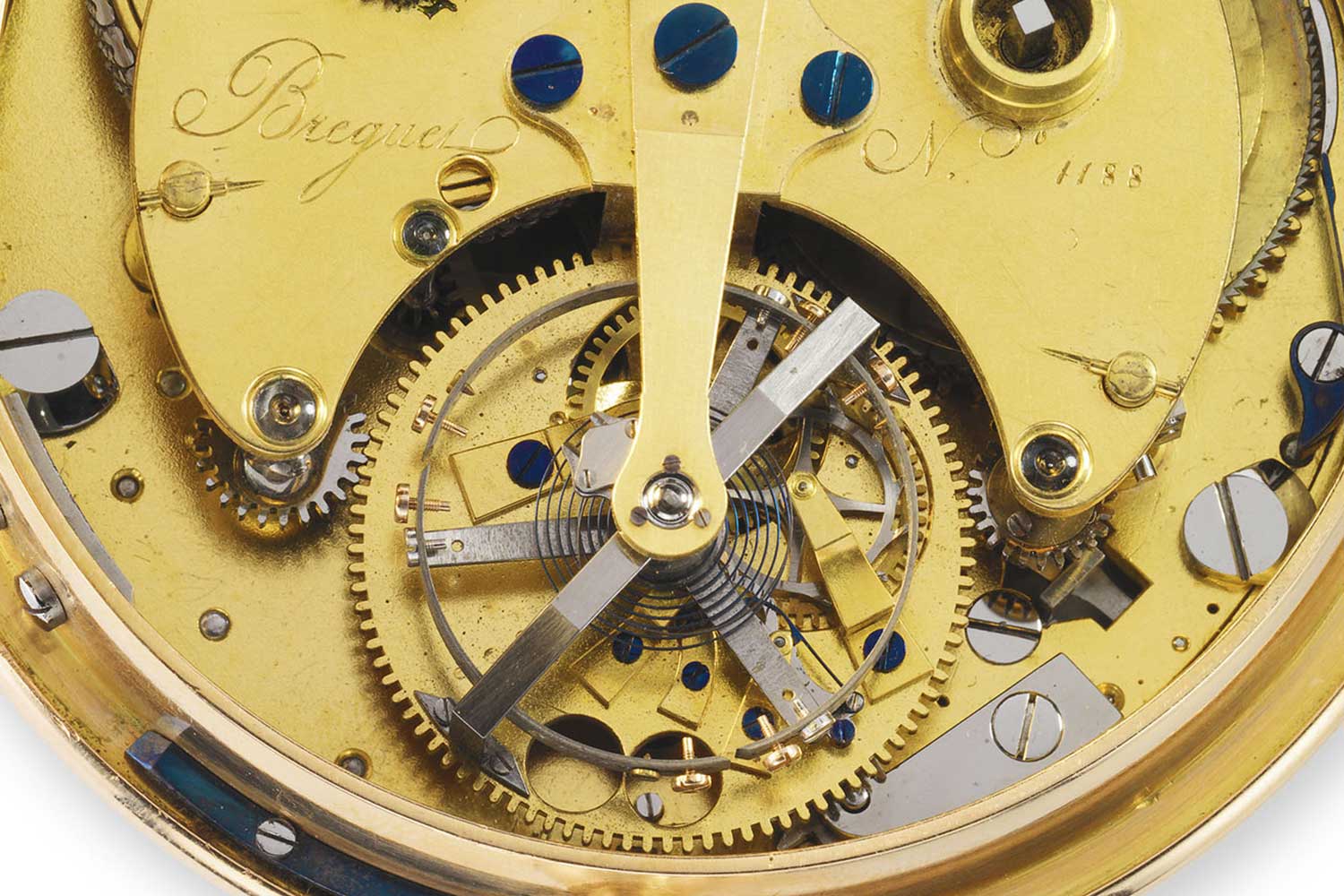
- Breguet No. 1188 with a natural escapement: a larger 12-tooth escape wheel is driven by a wheel beneath which drives a pinion. The pinion in turn drives the second escape wheel with three teeth
While both Daniels and Lederer admired Breguet’s attempt to make a non-lubricated, shock-resistant double impulse escapement, they both arrived at the same conclusion. Lederer explains, “There is one major issue with the natural escapement; rather than two wheels, it actually needs four wheels to function, with the two escape wheels and the two drive wheels taking power from the train and allowing them to interact.” He begins to sketch out the natural escapement on paper as he elaborates, “You need 16 times more energy to the whole system to get this to function properly, and the natural escapement also begins to decline significantly in performance as soon as mainspring torque is not optimal.”
Instead, Lederer decided to champion the system created by George Daniels, known as the Independent Double Wheel Escapement. He says, “The big difference here is that each of the two escape wheels is powered by its own barrel and gear train.” According to Lederer, this allowed Daniels to “invent a system to accelerate the two wheels without having to connect them through additional wheels. But this system takes more space. For many years, it was considered impossible to implement inside a wristwatch.”
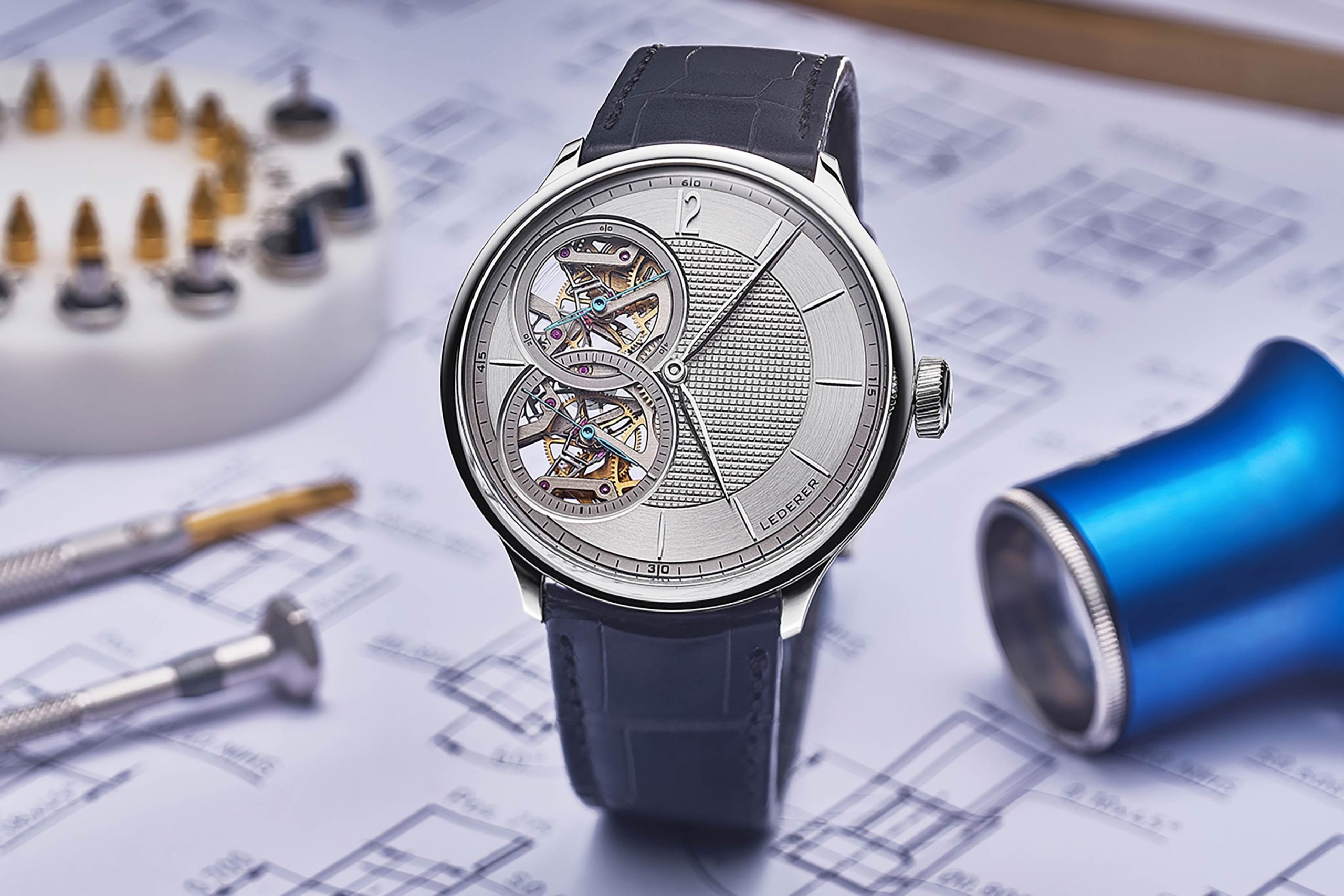
Central Impulse Chronometer, 2021
In 2021, when Lederer unveiled the Central Impulse Chronometer, a successful wristwatch implementation of the Independent Double Wheel Escapement, it was a revelation. There was another timepiece introduced in 2018 by British firm Charles Frodsham that also used Daniels’ escapement, but Lederer’s watch features distinct advantages.
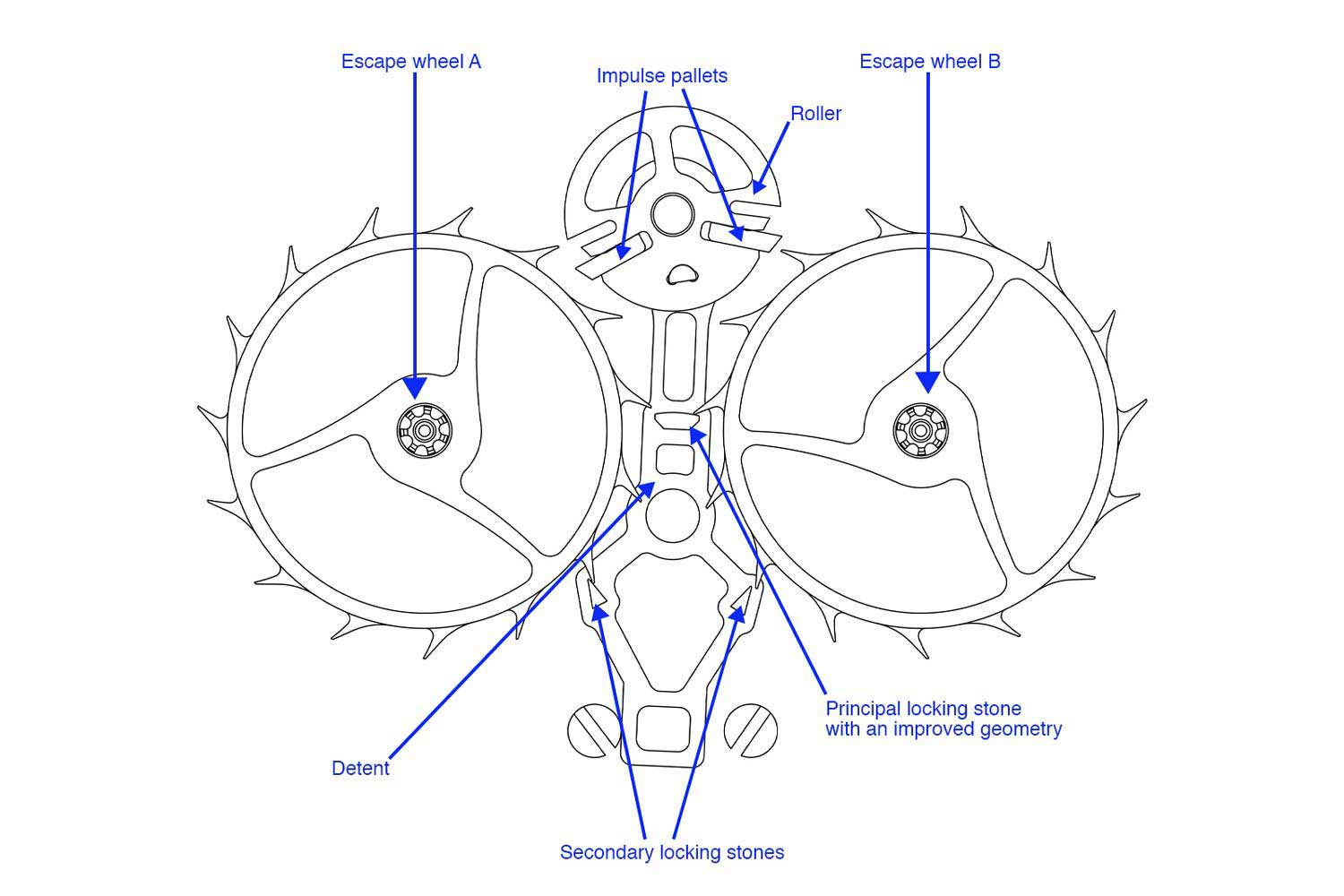
Bernhard Lederer’s key accomplishment with the independent double-wheel escapement is its self-starting ability. At low amplitudes, a tooth of the escape wheel that previously rested on the principal locking stone rides over a minute sloped surface. As it does, it nudges the detent sideways, prompting a rotation of the double roller. This ensures that the impulse pallet consistently remains positioned in front of the tooth responsible for direct impulse transmission
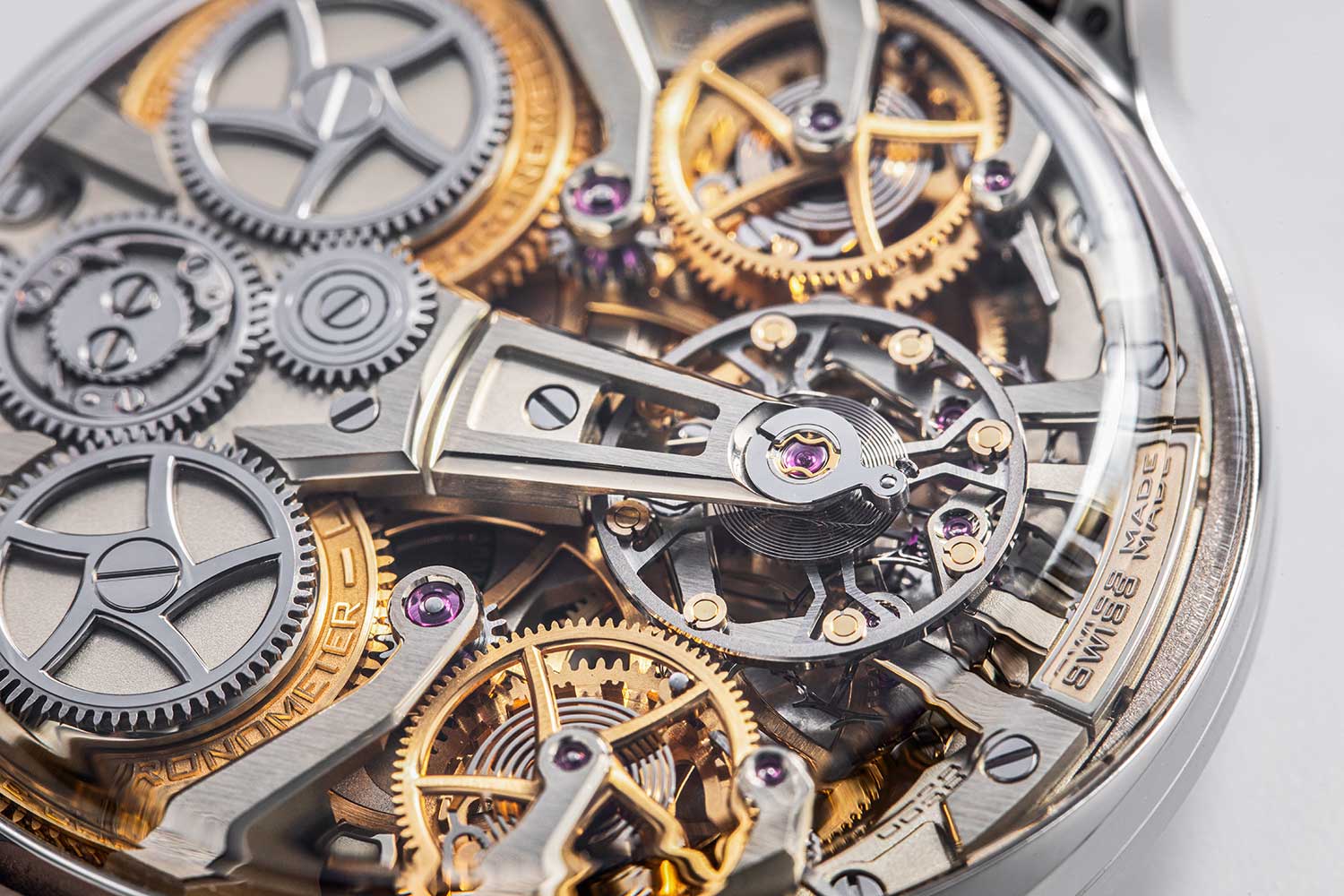
A close up of the in-house developed free-sprung balance attached to an overcoil hairspring (©Revolution)
The Remontoir Solution
To understand Lederer’s thought process in designing his movement, it is helpful to draw a comparison with Greek mythology. Thetis, mother of the great Achilles, dips him in the River Styx, making him invulnerable in all places, save the heel that she held him by. The term “Achilles’ heel” thus became a way of pointing out a weakness in a person or system that might otherwise seem all powerful. Further, for those of you familiar with Star Wars lore, Luke Skywalker flies his X‑wing down into the Death Star’s trench and uses the Force to send torpedoes down an exhaust port and into the otherwise invulnerable genocide machine’s reactor core, causing it to explode into smithereens. We later learn that this Achilles’ heel was placed there intentionally by Galen Erso, the Death Star’s primary engineer and a secret Rebel sympathizer, so that it could later be destroyed.
Since time immemorial, the primary Achilles’ heel of the mechanical watch has been its power source, known as the mainspring. This is, as the name implies, a massive spring that is coiled up and contained inside what we call the barrel. Winding the barrel tightens the mainspring, allowing it to store potential energy, which is released as it unwinds and the barrel turns. When that happens, it sends energy down the gear train by engaging the pinion of the second, or center wheel, which then engages the pinion of the third wheel, which is similarly geared to the fourth wheel. The fourth wheel completes one rotation every 60 seconds and, as such, is also called the seconds wheel. In a direct drive seconds indicator, the seconds hand is fixed to this wheel. The seconds wheel drives the escape wheel, which sends pulses of energy to the escapement each time it unlocks. Finally, the escapement directs the energy, which comes all the way from the mainspring, to the balance wheel.
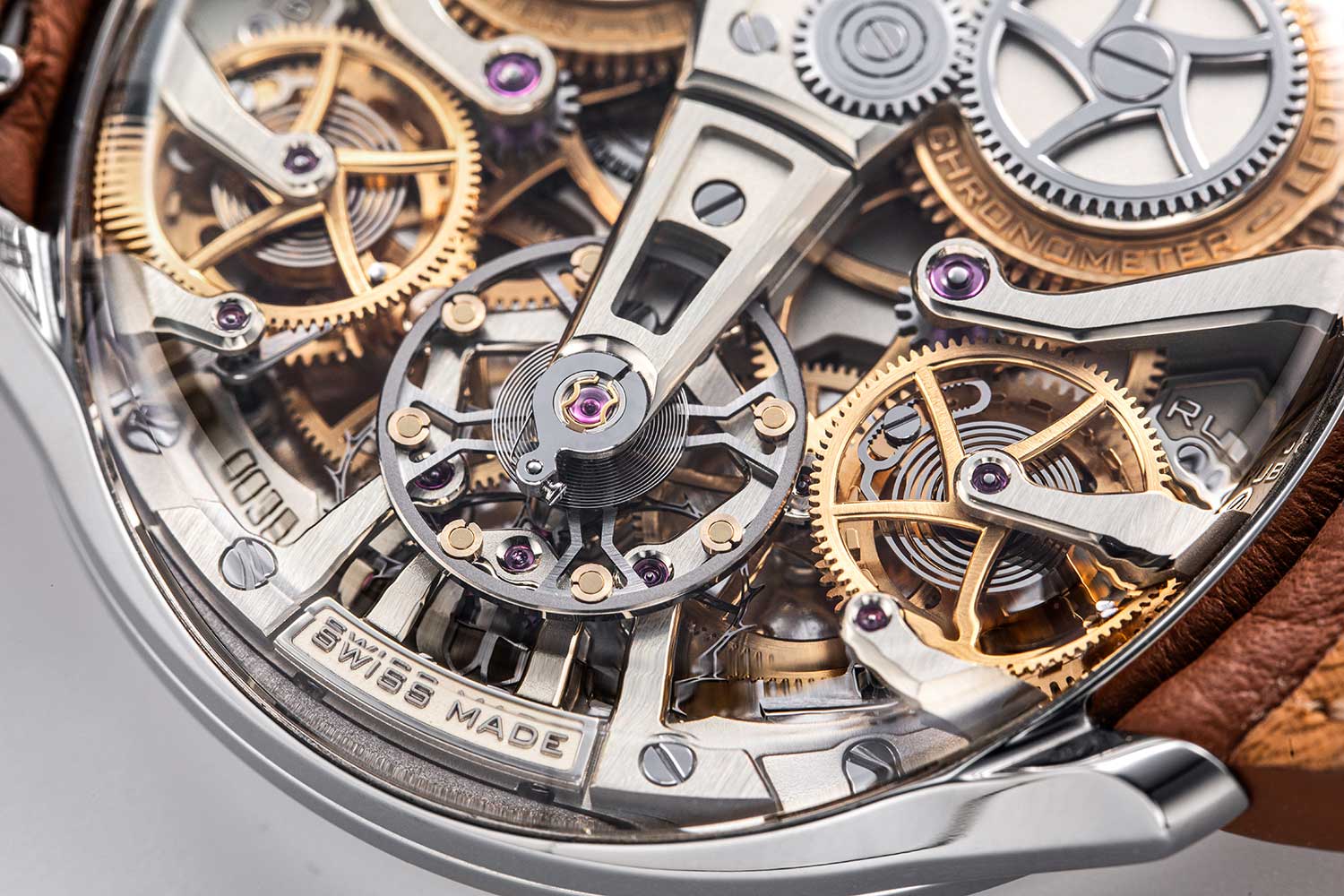
A close-up of the dual train construction (©Revolution)
The common belief is that the first 20 percent and last 20 percent of power reserve is not ideal, and that the torque sent down the gear train is either too strong or too weak, causing the balance wheel to lose isochronism, leading to inaccuracy in the watch. The reason the power reserve indicator was created and why it is so instrumental in timepieces such as the marine chronometer was not just to provide a reading of energy left in your watch, but also that in the case of a precision device, we would know ideally the sweet spot to keep energy levels at.
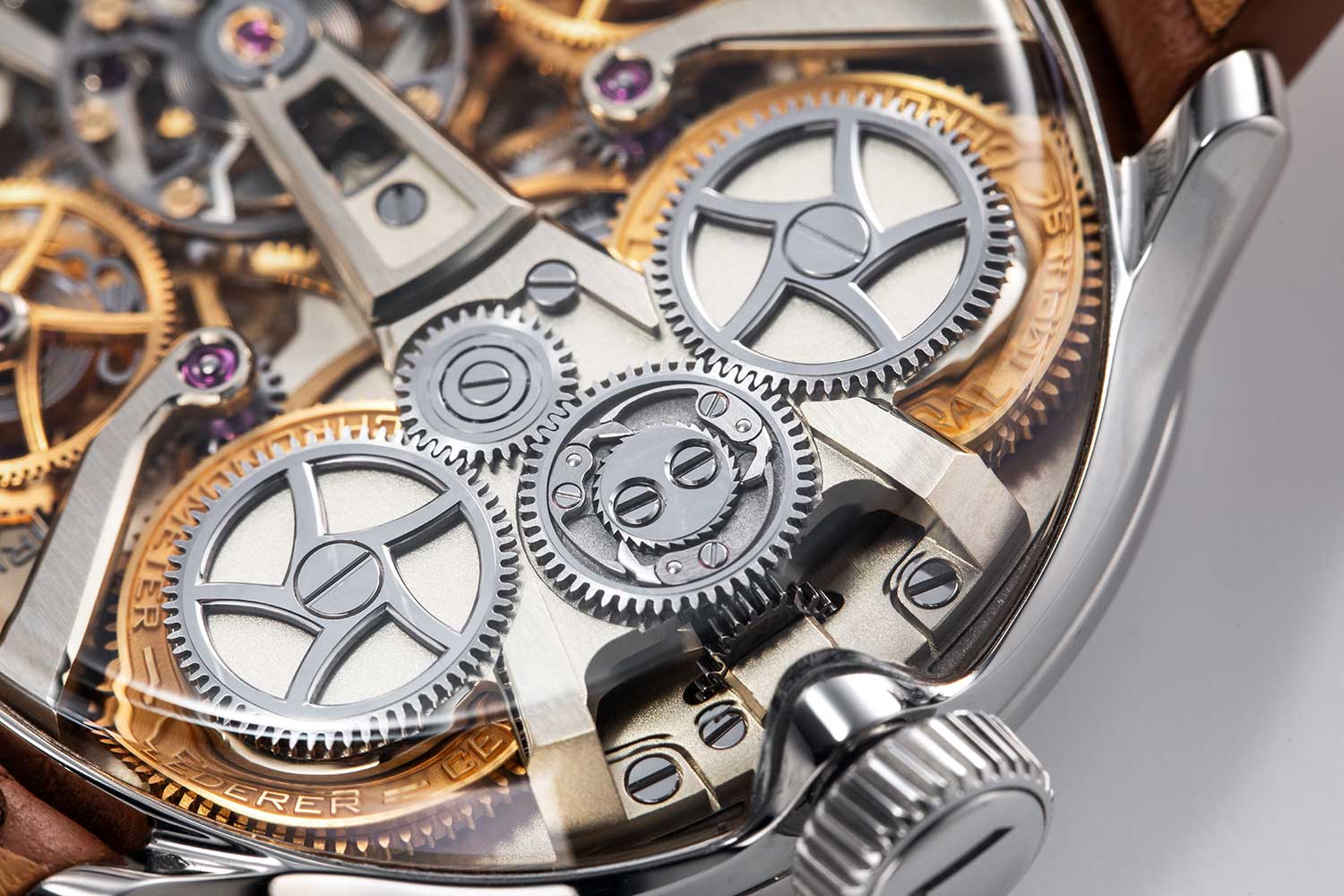
Lederer CIC 39 “Eddy Jaquet & Yann von Kaenel” for Revolution. Both barrels are wound via a crown wheel with integrated triple winding clicks. As the escape wheels must be driven in opposite directions, an intermediate wheel is added between the crown wheel and the second barrel ratchet to reverse the direction of rotation (©Revolution)
The remontoir d’égalité is a mechanism that removes the balance wheel altogether from the influence of the barrel. Indeed, the only use for the power coming from the barrel is to rewind the remontoir wheel, which in turn tensions the spring that actually delivers power to the balance wheel. That’s right — the remontoir that sits within the gear train is its own mighty autonomous energy source. It is an independent power supply that sits as close to the balance as possible and is the sole organism in the watch that delivers power to it.
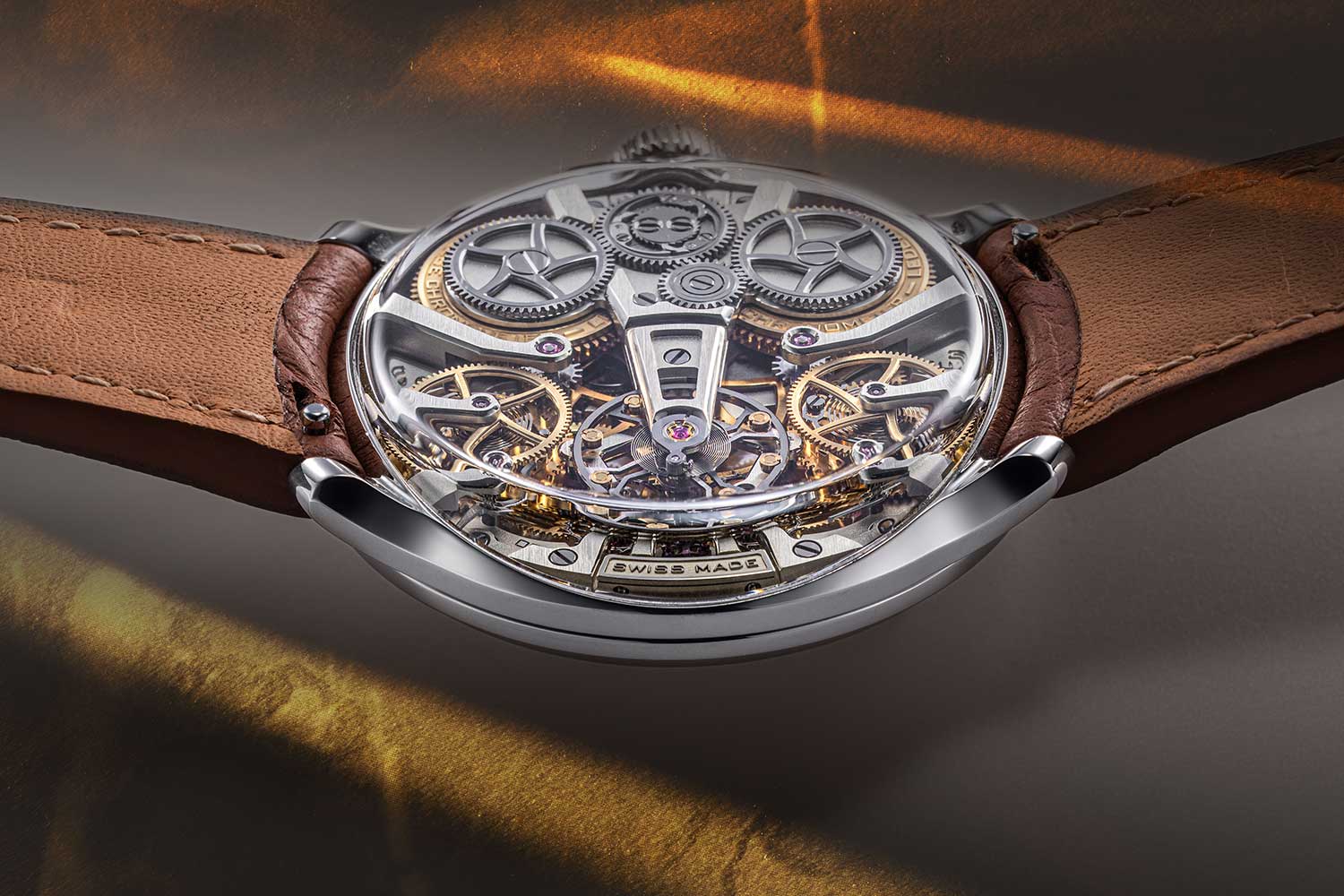
Lederer CIC 39 “Eddy Jaquet & Yann von Kaenel” for Revolution (©Revolution)
While there are several improvements made by Lederer to get the Independent Double Wheel Escapement to function in his Central Impulse Chronometer, one key innovation was the use of the previously mentioned two remontoirs d’égalité, each sitting between the third and fourth wheels of the respective gear trains. In the 44mm Central Impulse Chronometer, the two remontoirs are rearmed every 10 seconds. The key to the remontoirs is they allow perfectly symmetrical energy delivery to each of the escape wheels, ensuring uniform pulses to the balance wheel. Such constant force is particularly important when the torque from the mainspring diminishes. Lederer explains that, at low amplitude, “the liberation of one wheel can provoke the teeth of the active escape wheel to slip in front of the impulse‑taking pallet — which is on the balance staff — and then you miss one, maybe two escape wheel teeth; it will impact precision. For me, this was a real problem.”
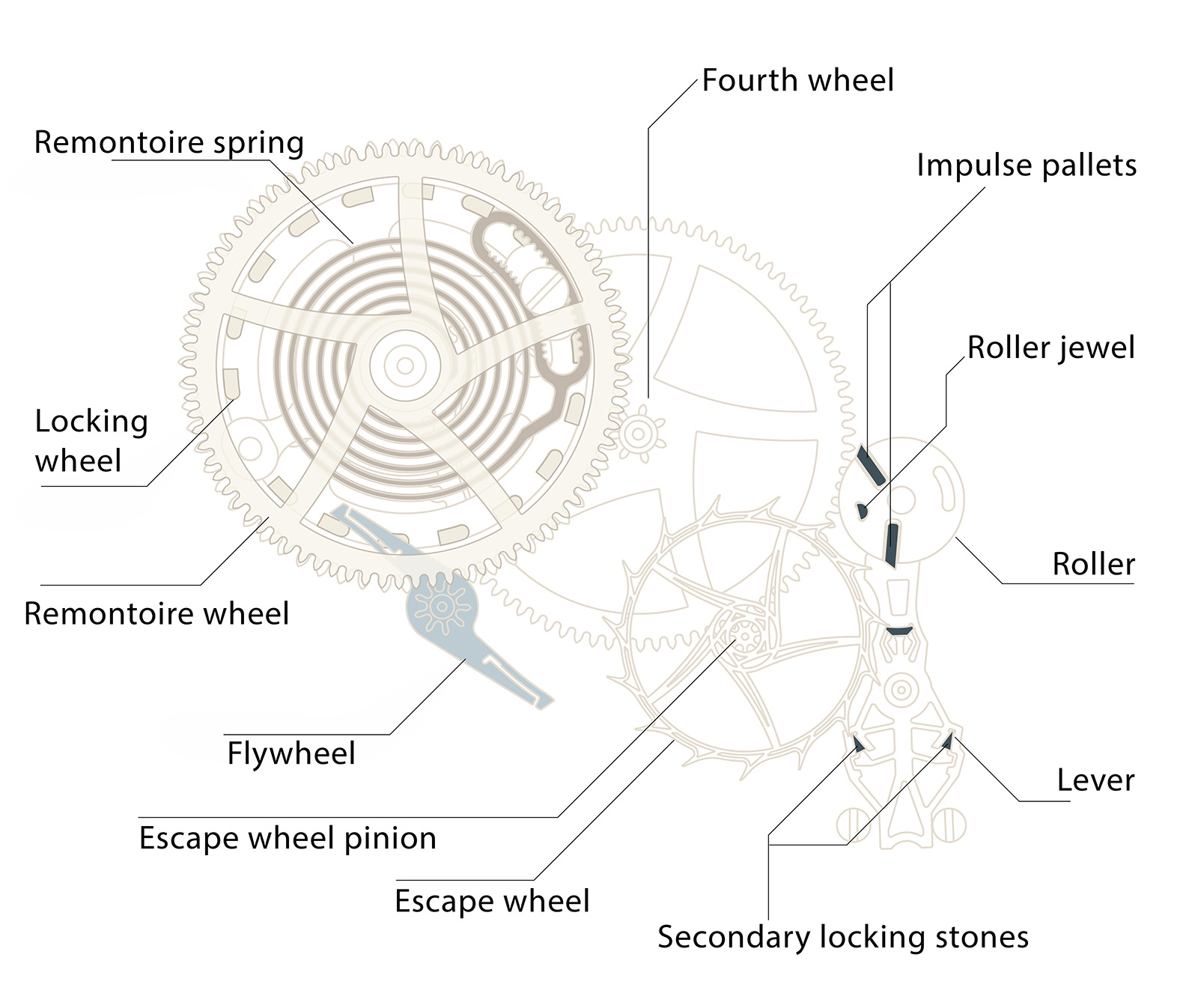
In Lederer’s CIC 39mm, all parts of the remontoir are localized on the third wheel, which features pillars acting as a stop wheel. Coaxially mounted is the remontoir wheel, connected via a spiral spring and geared to a pinion carrying a flywheel. During operation, the flywheel rests against a pillar, locking the remontoir wheel in place. As the third wheel continues to rotate, it moves the pillar out of the way, releasing the flywheel and allowing the remontoir wheel to rotate. The spring then unwinds, delivering constant torque to the downstream gear train. The cycle ends when the flywheel strikes the next pillar, halting the remontoir wheel and beginning the re-tensioning phase.
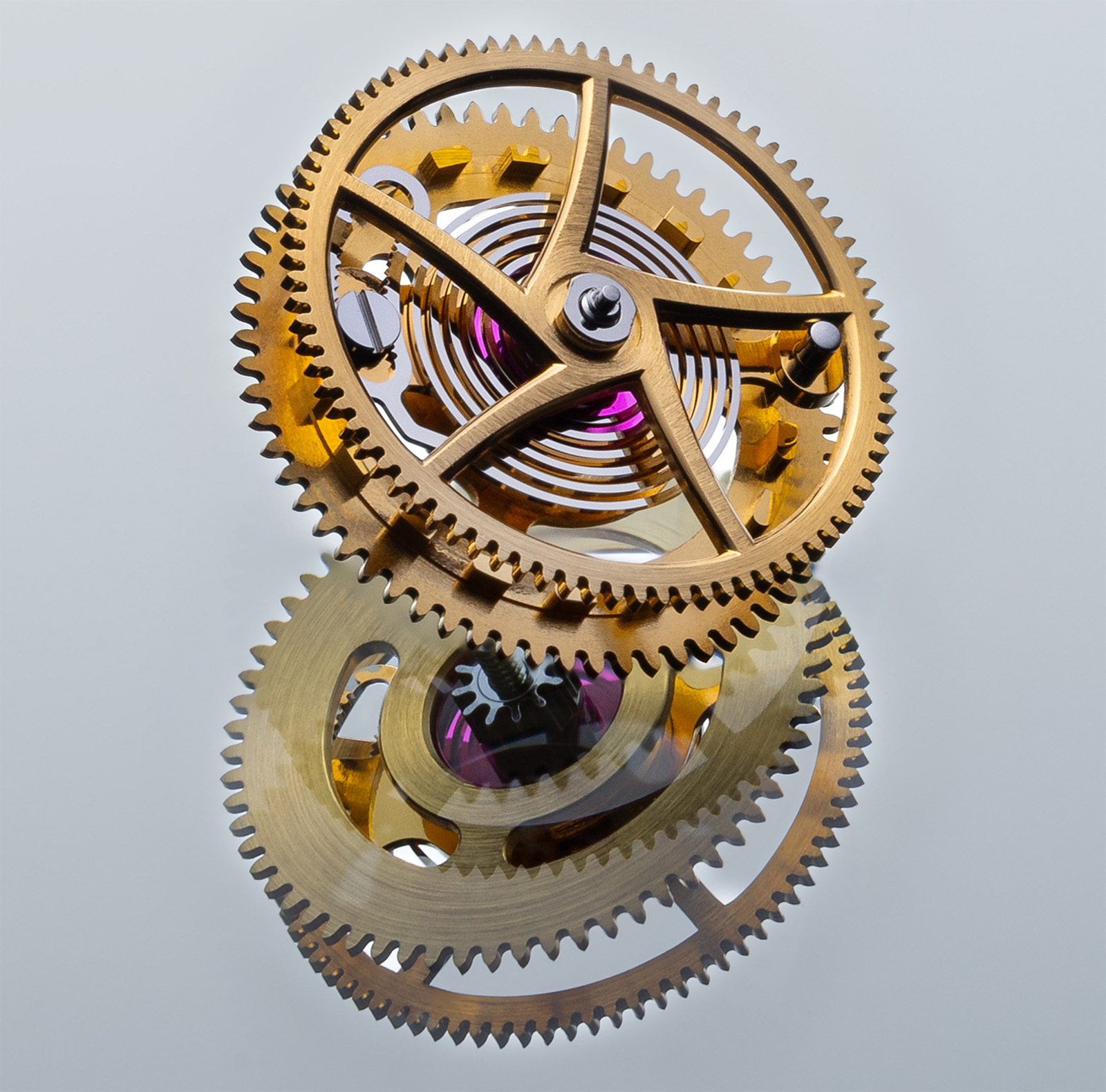
The release mechanism is positioned directly on the same axis as the remontoir spring, allowing the remontoir to be triggered precisely at the point where energy is introduced
Perfectly Proportioned, Beautifully Expressed
Now all that was already incredibly impressive to me. But there was just one issue. By 2023, we could already see that collectors’ taste had shifted to smaller, more classic-sized timepieces. Watches like the 44mm Central Impulse Chronometer were daring and innovative, but, in terms of size, they were slightly out of place in the modern landscape. Or so I thought, until Lederer announced to me, “Wei, we are going to launch our 39mm version of the watch soon.” And then I knew that the perfect timepiece was on the horizon — well, almost perfect, from my perspective.
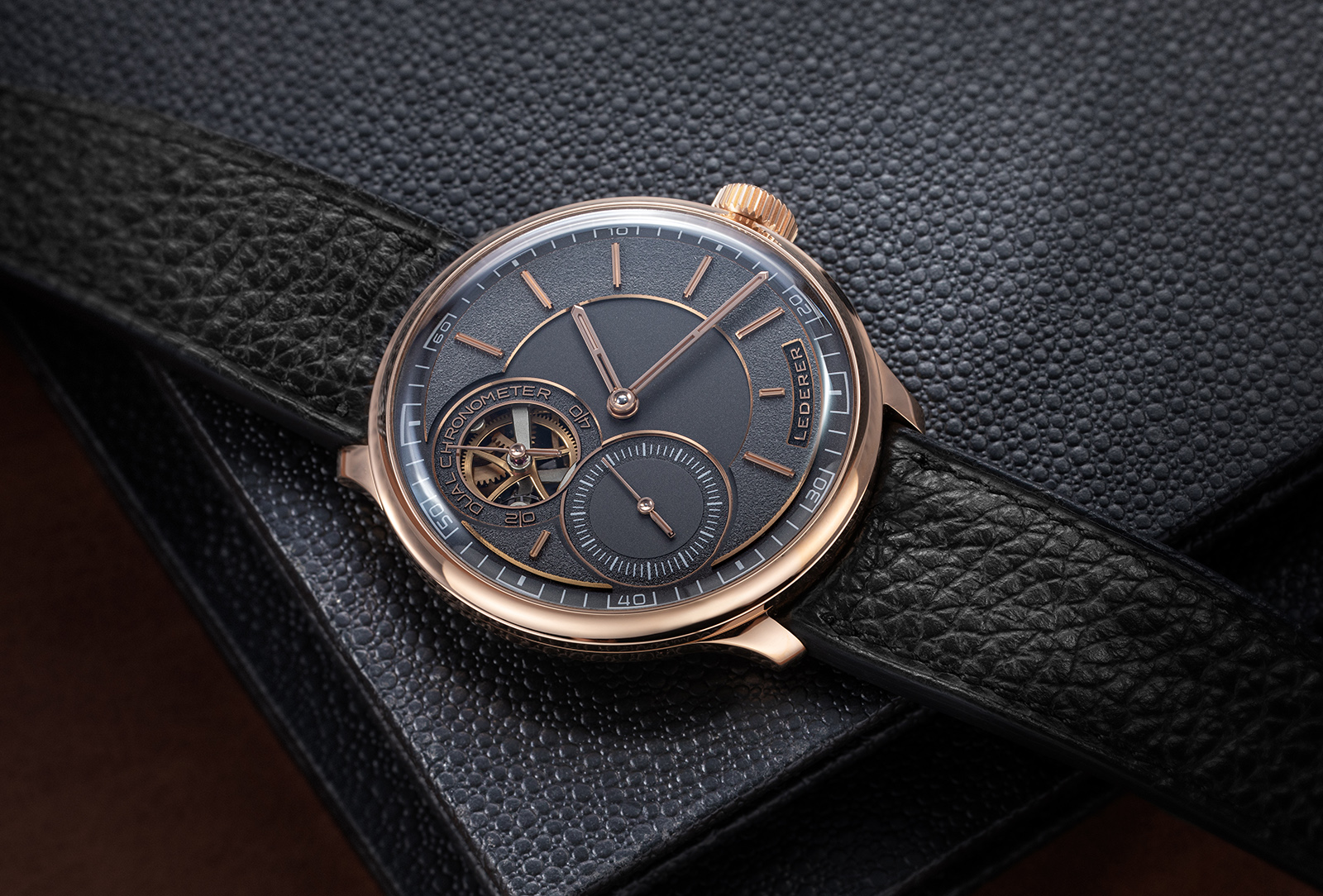
Bernhard Lederer Central Impulse Chronometer 39mm (©Revolution)
Because while I loved Lederer’s movement and can understand why there has been a demand for his watch, the InVerto, which features the movement flipped to the front, I always found his dials a little too austere and sober. At the same time, I didn’t want to impose a visual identity that wasn’t core to him. After one evening at Neuchâtel’s Brasserie Le Cardinal with him and Ewa, he turned to me and said, “OK, I understand what you want — something more expressive. I am going to ask two of my friends to collaborate with me on the dial.”
The two friends turned out to be none other than the legendary engraver Eddy Jaquet and the absolute badass guillochéur Yann von Kaenel.
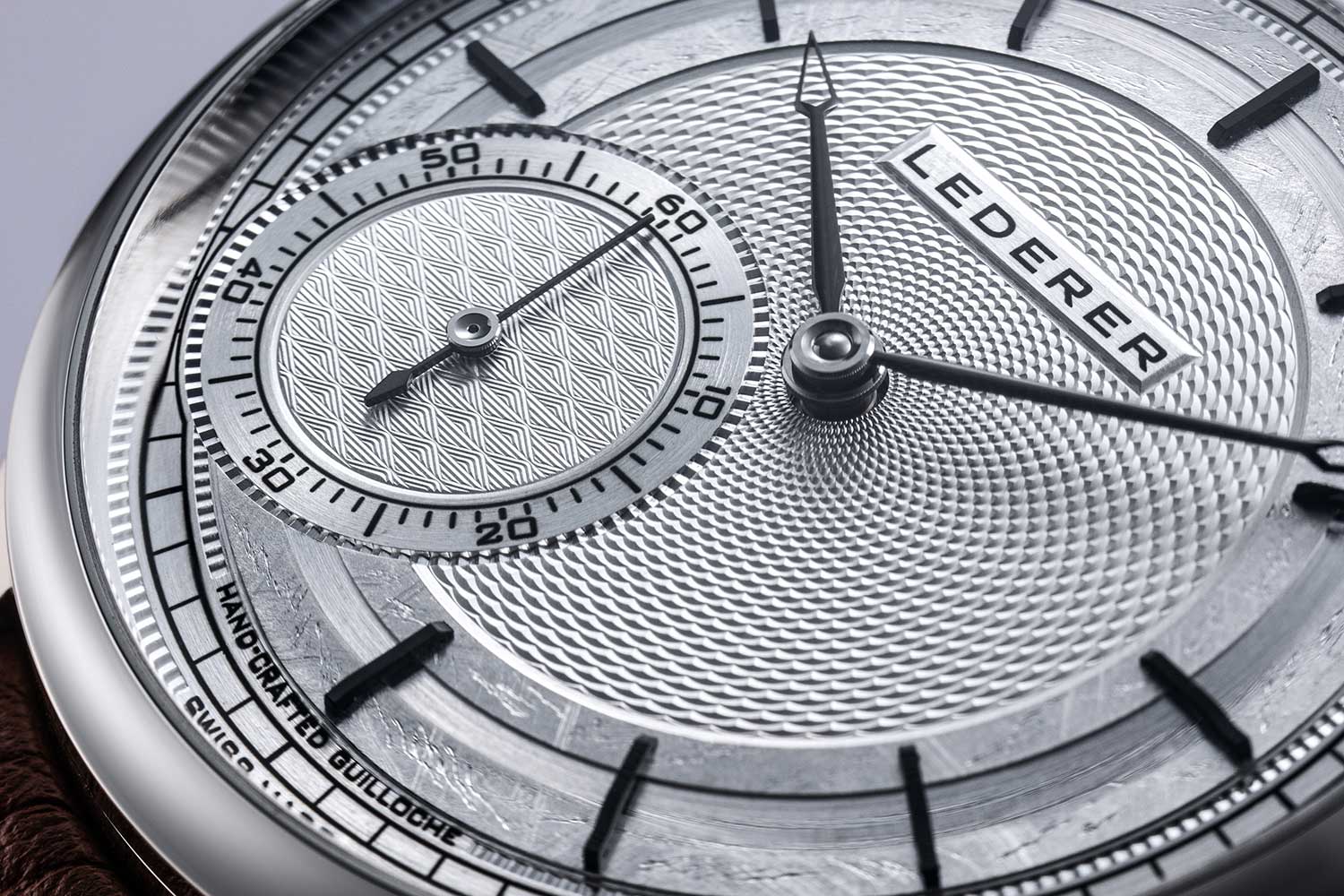
Lederer CIC 39 “Eddy Jaquet & Yann von Kaenel” for Revolution (©Revolution)
Jaquet chose for his engraving a gratté pattern. He explains, “This has its roots in function. In the past when you had two flat metal surfaces sliding against each other, you couldn’t oil them effectively because the oil would just be forced out. So, craftsmen began using this hand-applied gratté pattern to create grooves for the oil. From a pragmatic purpose, it then became a beautiful decorative pattern, and I have used it in a way that features a subtle, swirling chiaroscuro-type effect.”
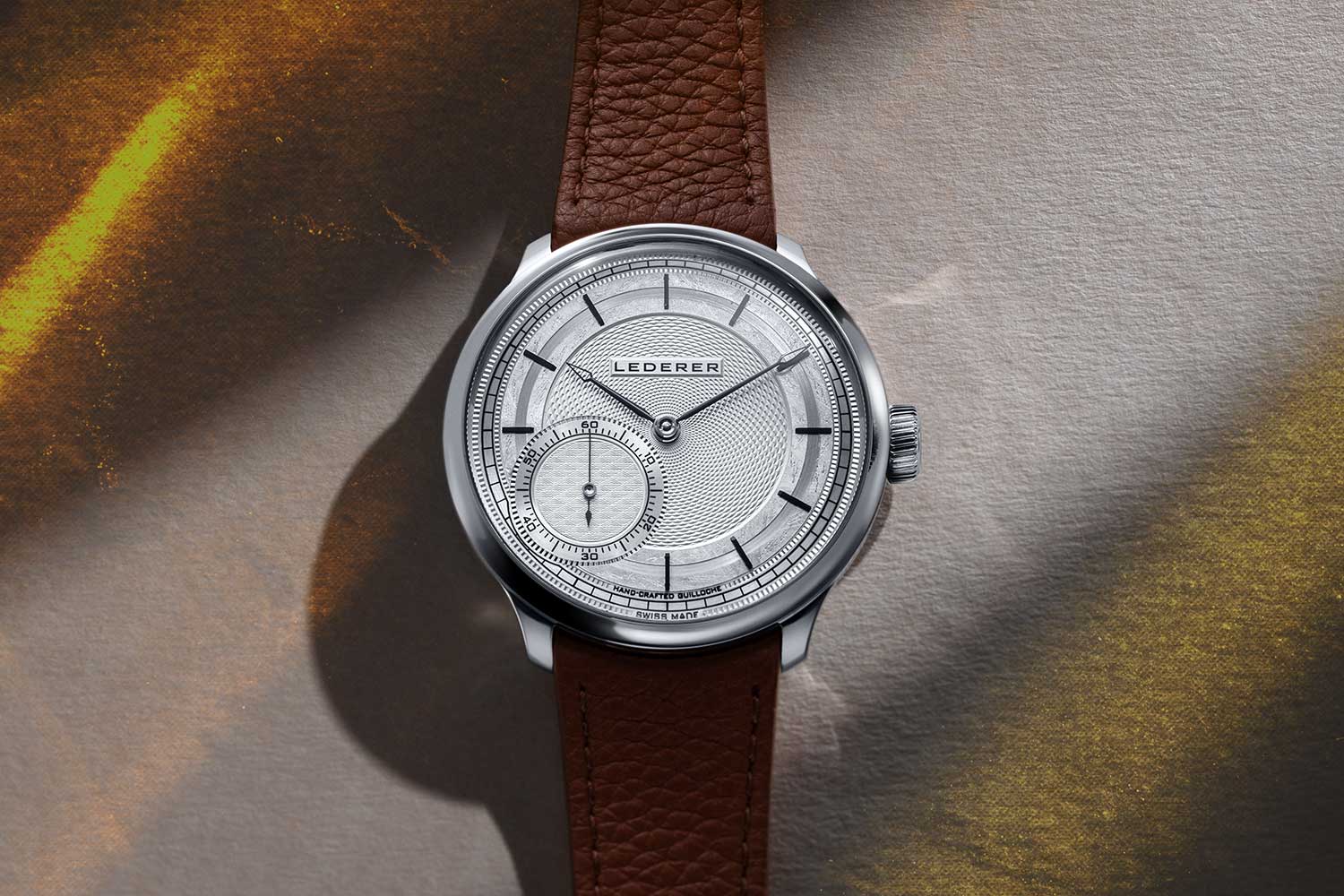
Lederer CIC 39 “Eddy Jaquet & Yann von Kaenel” for Revolution (©Revolution)
Von Kaenel is the director of Décors Guillochés S.A. Amazingly, he had built a career in a completely different field before his father asked him to come take over the family’s guilloché business. He declares, “There is something remarkable about how in this digital age human beings long even more for things that are made by hand. This is the beauty of guilloché that must be guided entirely by hand when the artisan is in exactly the right frame of mind to exert the perfect consistent pressure. The dials that we have created for this project are amongst the most beautiful we’ve ever made.”
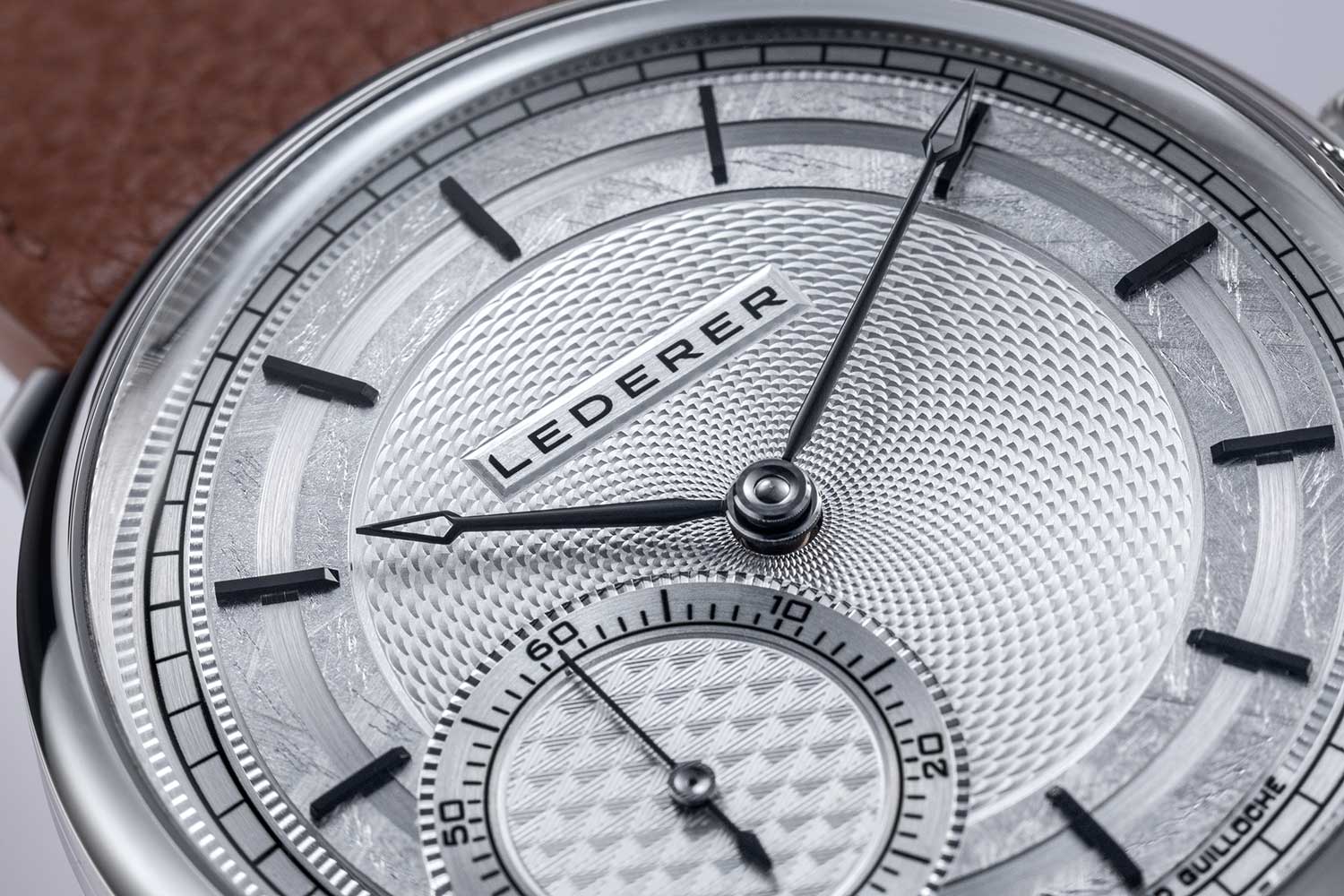
The Lederer CIC 39 “Eddy Jaquet & Yann von Kaenel” for Revolution combines two different guilloché patterns with gratté finishing on the chapter rings (©Revolution)
The resulting five-piece limited edition celebrating Revolution’s 20th anniversary are, from my perspective, ravishing works of métiers d’art, paired with one of the most significant movements ever created, in watches that are perfectly sized at 39mm. Despite the immense work involved, we have collectively decided to price each watch the same as a regular version of Lederer’s Central Impulse Chronometer, as a way of giving back to everyone who has supported Revolution over the past 20 years.
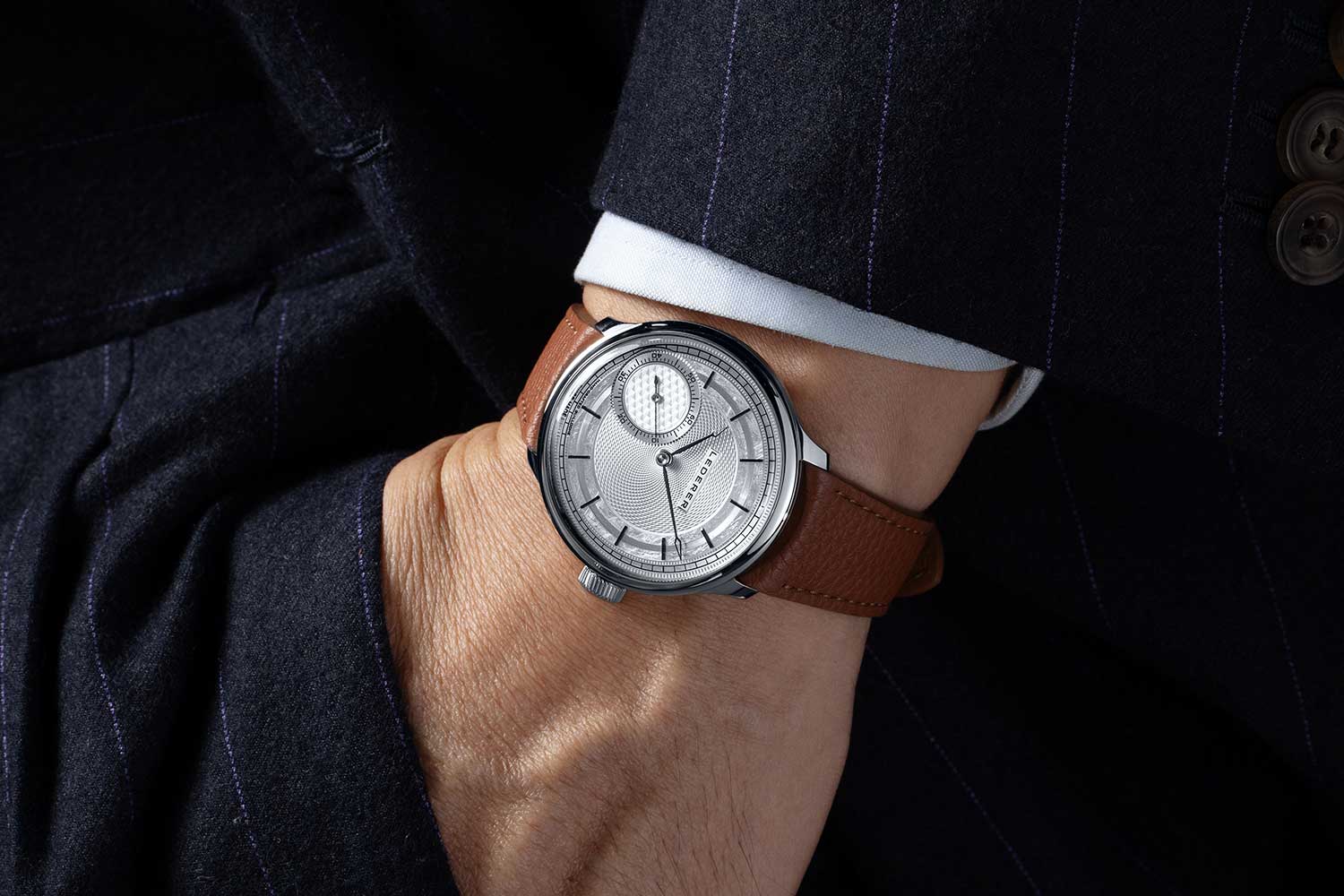
Lederer CIC 39 “Eddy Jaquet & Yann von Kaenel” for Revolution (©Revolution)
Tech Specs:
Lederer CIC 39 “Eddy Jaquet & Yann von Kaenel” for Revolution
Movement Lederer inhouse, hand-wound movement with double detent escapement, two independent gear trains, two constant-force mechanisms and 38-hour power reserve
Functions Hours, minutes and off-center small seconds
Case 39 mm stainless steel, water resistant to 30m; domed sapphire crystal
Dial Hand-guilloché with a gratté pattern
Strap Handmade calf leather strap
Price CHF 139,000 excluding taxes
Availability Limited edition of five pieces
Bernhard Lederer
You may also like

Editorial
The Revolutionary List: 25 Watchmakers and Construction – Bernhard Lederer
Dec 15, 2025
Editorial
The Revolutionary List: 25 Watchmakers and Construction – Bernhard Lederer
Dec 15, 2025
Editorial
The Essence of Time: Bernhard Lederer and The Art of Escapement
Nov 19, 2025
Editorial
The Essence of Time: Bernhard Lederer and The Art of Escapement
Nov 19, 2025
Reviews
A Closer Look: Bernhard Lederer Central Impulse Chronometer 39mm
Apr 26, 2024
Reviews
A Closer Look: Bernhard Lederer Central Impulse Chronometer 39mm
Apr 26, 2024