The Revolutionary List: 24 Technically Brilliant Watches – Louis Vuitton Tambour Twin Chrono
Editorial
The Revolutionary List: 24 Technically Brilliant Watches – Louis Vuitton Tambour Twin Chrono

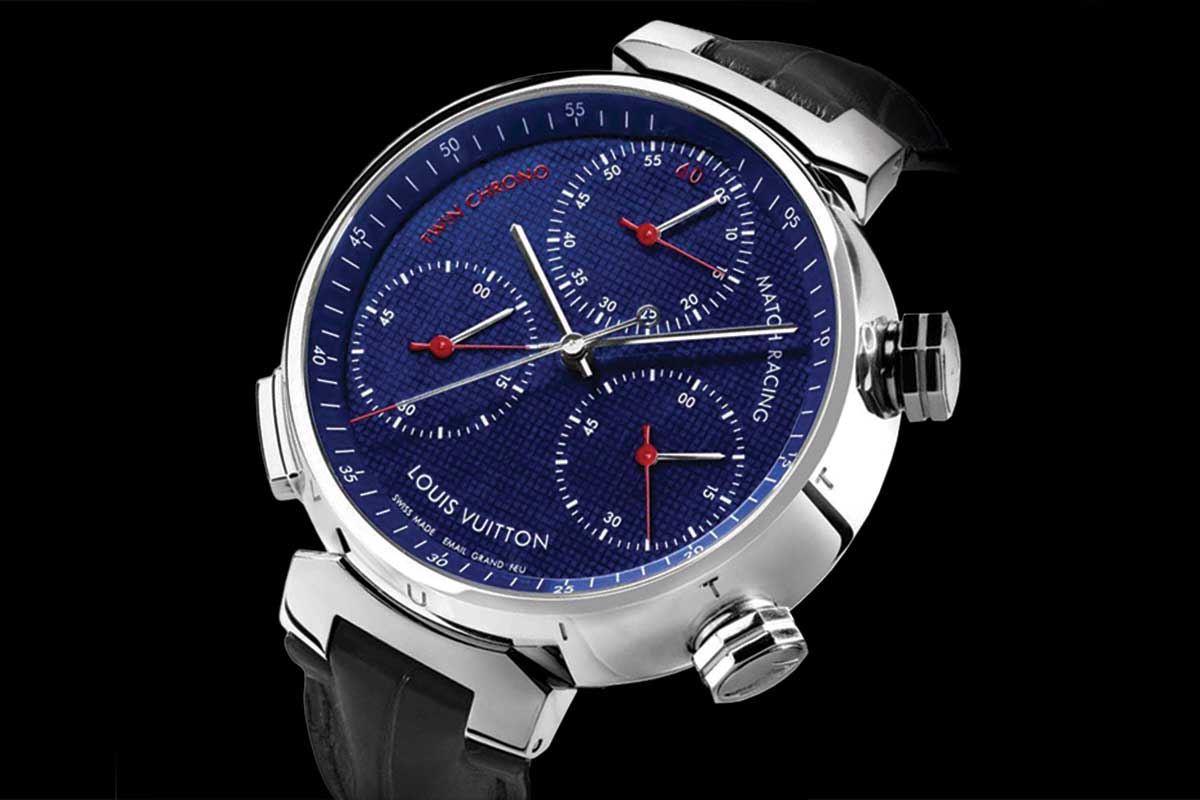
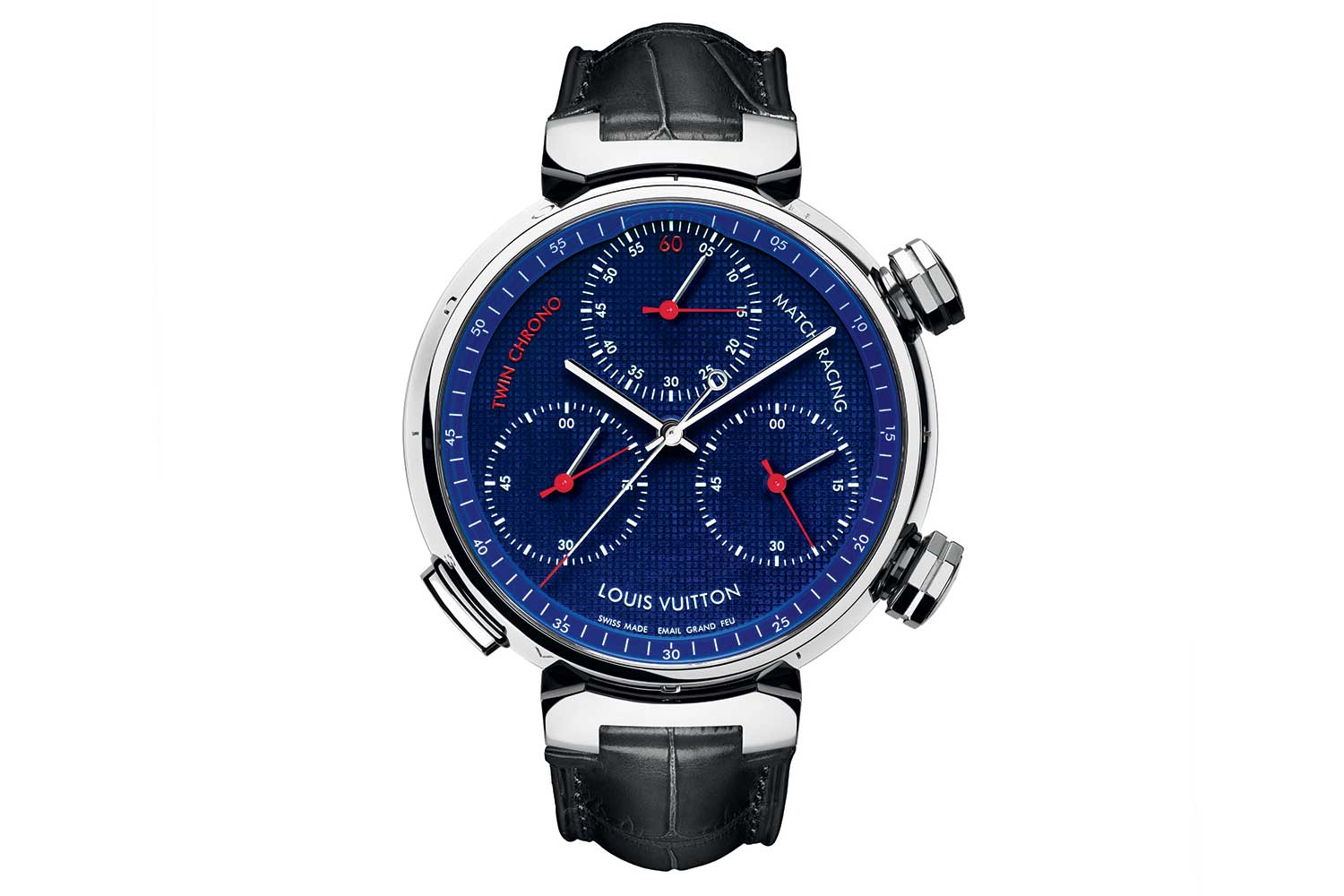
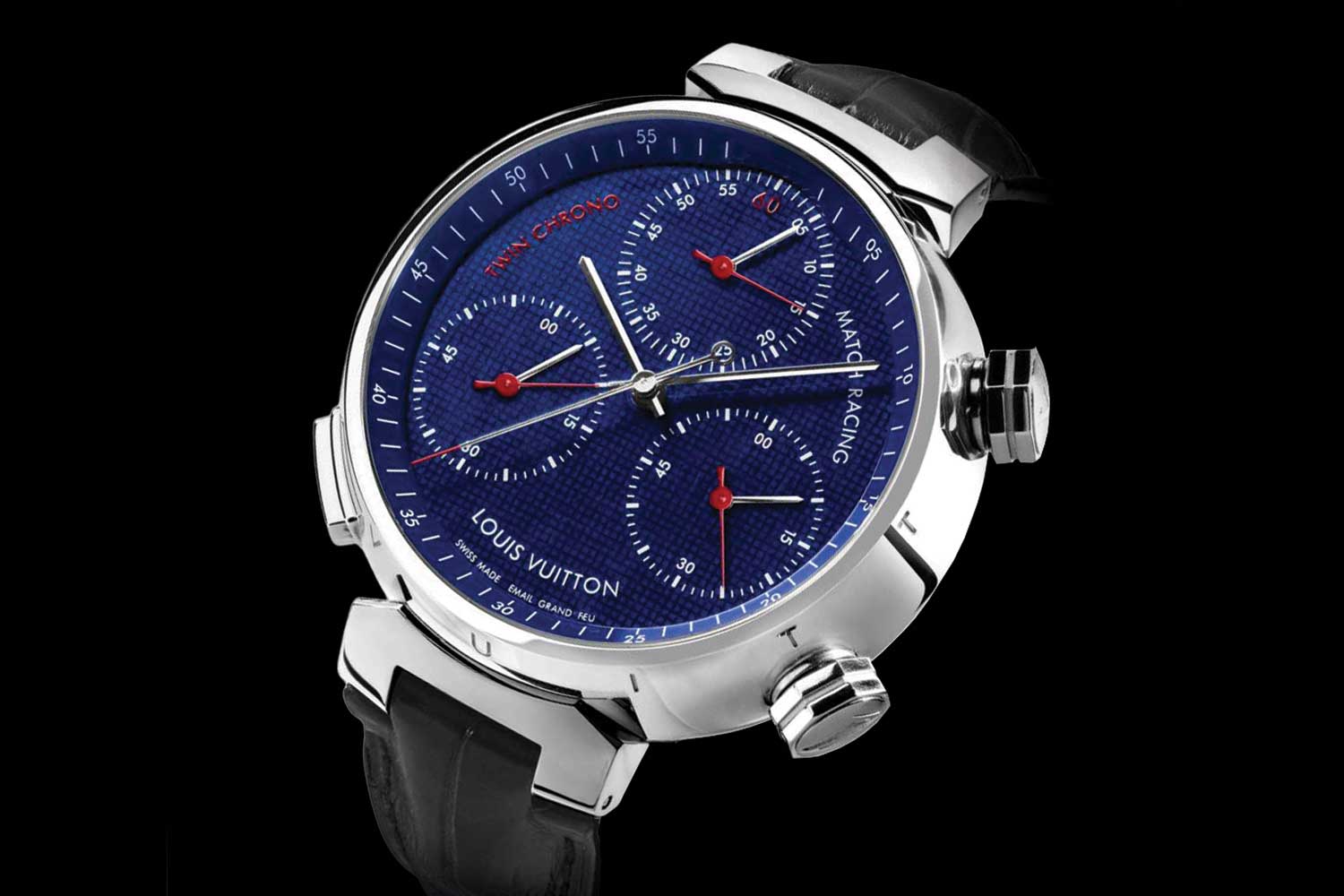
In 2013, Louis Vuitton introduced the Tambour Twin Chrono, a chronograph capable of recording two distinct elapsed times up to 60 minutes and displaying the difference between them. Four years in the making, the unusual complication was purpose-built for match racing and launched to commemorate the 30th anniversary of the Louis Vuitton Cup.
Unlike a rattrapante, which relies on one chronograph train with a split seconds mechanism, the Tambour Twin Chrono contained three independent chronograph trains, each with its own barrel and regulating organ.
At the start signal, both the first and second chronographs can be activated simultaneously via the pusher at 7 o’clock. When the first boat crosses the finish line, a second press of the same pusher stops the first chronograph while allowing the second to continue running. At that same instant, the differential chronograph begins to record the growing gap between the two. When the second boat crosses, a third press of the pusher stops both the second chronograph and the differential together.
Louis Vuitton Tambour Twin Chrono
The result is three clear readouts across three sub-dials — the elapsed time of the winner, the elapsed time of the other competitor and the exact winning margin. All this was made possible by a multi-stage column wheel that coordinated the start, stop and reset sequences without the complex clutches found in traditional chronographs.
Instead of the usual single ring of pillars, the mechanism employs the multi-stage column wheel with several levels of notches arranged along the same axis. Each stage governs a different set of levers and hammers, allowing the three independent chronograph trains to be started, stopped or reset in the right sequence with nothing more than successive presses of a single pusher. It is a thoughtful solution, one that imposes order on what could otherwise have been an unmanageable tangle of controls, and it demonstrates that even within a brute-force architecture, there was room for finesse in the details.
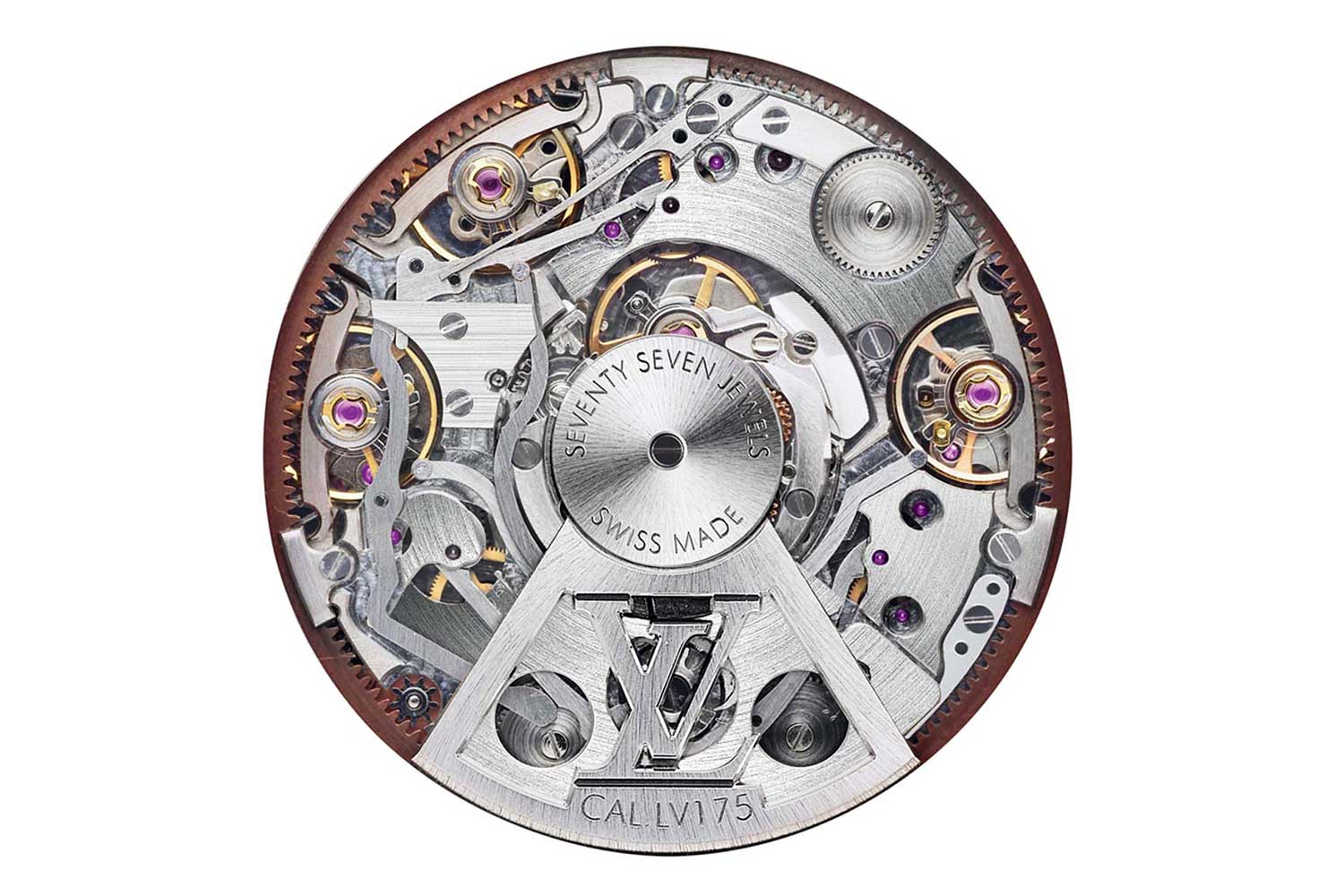
The caliber LV175
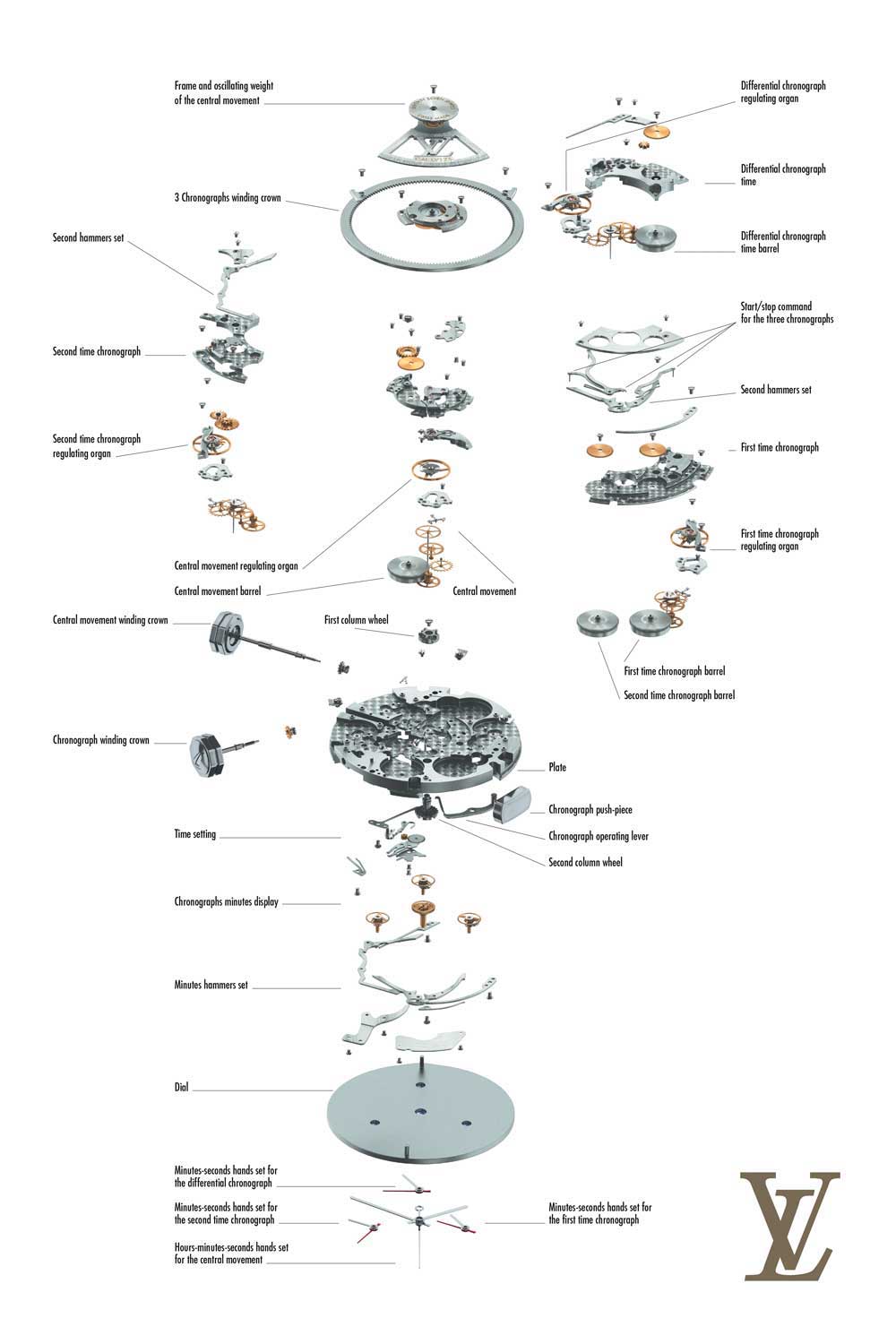
Resetting the displays relied on two coordinated sets of heart-pieces and hammers. Each chronograph register has co-axial seconds and minute hands, with the two resets divided between planes. On the dial side, the hearts for the minute hands were acted on by hammers controlled by the second column wheel. On the bridge side, the hearts for the seconds hands were reset by hammers governed by the first column wheel. Splitting these functions across two planes allowed all three chronographs to be zeroed cleanly and simultaneously, without the resets of seconds and minutes interfering with one another.
The three chronograph barrels are all wound together by a single crown at 4 o’clock through a winding ring with internal teeth. On the other hand, the main time keeping gear train is located in the center of the movement with its own barrel, escapement and balance wheel. Its barrel is wound in dependently via a rotor or manually via the crown at 2 o’clock. There is no clutch, no mechanical differential, no split seconds mechanism, no isolator — just the brute force of four independent trains running side by side.
The three chronograph barrels are all wound together by a single crown at 4 o’clock through a winding ring with internal teeth
While it is a solution that solves the problem by multiplying parts rather than mastering it, it offered a clear and reliable way to time head-to-head racing with simplicity and robustness.
Tech Specs: Louis Vuitton Tambour Twin Chrono
Movement Self-winding Caliber LV175, 35-hour power reserve
Functions Hours, minutes and small seconds; chronograph with differential display
Case 45.5mm × 14.35mm; 18K white gold; water resistant to 100m
Dial Hand guilloché 18K white gold base, with blue grand feu enamel
Strap Leather with pin buckle
Louis Vuitton
You may also like

Editorial
The Revolutionary List: 25 Watchmakers and Construction – Enrico Barbasini & Michel Navas
Dec 15, 2025
Editorial
The Revolutionary List: 25 Watchmakers and Construction – Enrico Barbasini & Michel Navas
Dec 15, 2025

Editorial
The Revolutionary List – 26 Inspirational Leaders: Jean Arnault
Dec 1, 2025
Editorial
The Revolutionary List – 26 Inspirational Leaders: Jean Arnault
Dec 1, 2025

Editorial
Making Time: La Fabrique du Temps Louis Vuitton
Nov 19, 2025
Editorial
Making Time: La Fabrique du Temps Louis Vuitton
Nov 19, 2025