



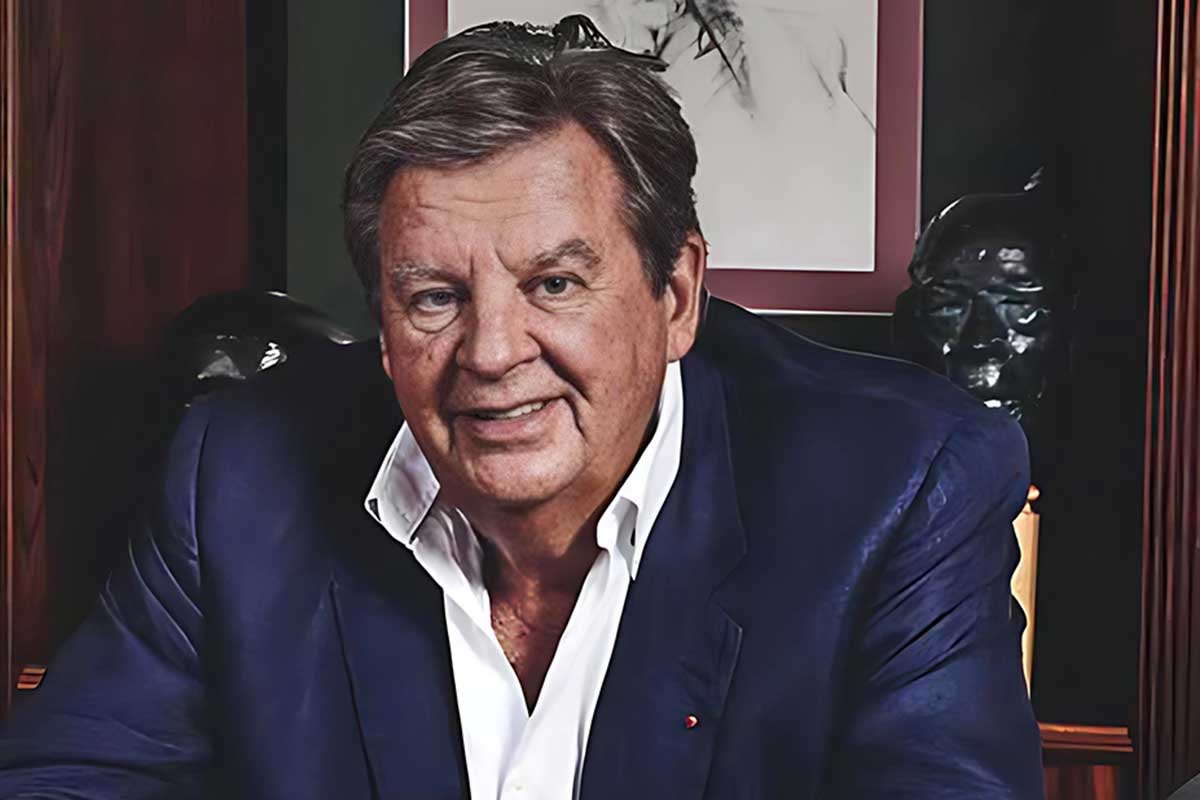
The Revolutionary List – 26 Inspirational Leaders: Johann Rupert
Editorial
The Revolutionary List – 26 Inspirational Leaders: Johann Rupert

This year, Revolution turns 20. Two decades of chronicling watches, people and ideas have given us a front-row seat to a remarkable story: how an age-old craft has both preserved its soul and reinvented itself for the 21st century. To celebrate, we’ve chosen over 100 names and milestones that, for us, define the era so far. From leaders to watches, you can see the whole list here.
When he acquired the LMH brands in 2000, Johann Rupert created the single most compelling and dynamic watch group in high luxury. He had, by this point, reunited Cartier under one roof thanks to Alain-Dominique Perrin. He had identified Panerai, thanks to Sylvester Stallone and Monty Shadow, and had the genius to see its true potential and then find the perfect Italian individuals — Angelo Bonati, Franco Cologni and Giampiero Bodini — to launch the brand into the stratosphere. He had also bought Vacheron Constantin in 1996. Acquiring IWC, Jaeger-LeCoultre and A. Lange & Söhne brought an injection of fresh dynamic watchmaking energy into his group. The turnover of the three brands then was modest compared to Richemont’s larger maisons, so when Rupert purchased them for 2.8 billion Swiss francs, the market was floored by the price. Nonetheless, these three brands have continued to bring an incredible level of watchmaking innovation to the group throughout the new millennium.
One interesting philosophy espoused by Rupert was to encourage internal competition. The first decade of the 21st century saw Georges Kern and Jérôme Lambert battle to elevate their respective brands, resulting in some of the most amazing timepieces of the modern era. Over the last decade, the Richemont Group has continued to be a powerhouse, though its maisons may have lost some of the excitement and purposeful sense of identity they had during the preceding decade. From my perspective, that is because of an over-reliance on leaders that don’t come from the watch world, or perhaps more importantly, don’t connect with watches in the way that, say, Günter Blümlein did. Roger Dubuis’ entire foray into “hyper horology” was the result. Rupert did, however, choose a brilliant leader in Cyrille Vigneron, who not only helped Cartier reconnect with its core identity, but also led the brand to reach a record 3.1 billion Swiss francs turnover at wholesale.

Today, the Richemont Group seems to have fixed its management issues and has almost all the right leaders in place for its maisons. It will be exciting to see the results over the next decade. Rupert has also appointed an extremely smart and capable Group CEO in Nicolas Bos, who is simultaneously a great business leader and, just as importantly, a “product person,” meaning a creator of timepieces in the way that Blümlein was.
You may also like

Limited Edition
An Artistic Evolution
Dec 29, 2025
Limited Edition
An Artistic Evolution
Dec 29, 2025
News
Long Live the Watch Nerds
Dec 24, 2025
News
Long Live the Watch Nerds
Dec 24, 2025

Editorial
Holiday Horology: Something Old, Something New, Something Special — Joyceline Tully, Revolution Asia Editor-in-Chief
Dec 20, 2025
Editorial
Holiday Horology: Something Old, Something New, Something Special — Joyceline Tully, Revolution Asia Editor-in-Chief
Dec 20, 2025