


The Revolutionary List – 26 Inspirational Leaders: Nicolas G. Hayek
Editorial
The Revolutionary List – 26 Inspirational Leaders: Nicolas G. Hayek

This year, Revolution turns 20. Two decades of chronicling watches, people and ideas have given us a front-row seat to a remarkable story: how an age-old craft has both preserved its soul and reinvented itself for the 21st century. To celebrate, we’ve chosen over 100 names and milestones that, for us, define the era so far. From leaders to watches, you can see the whole list here.
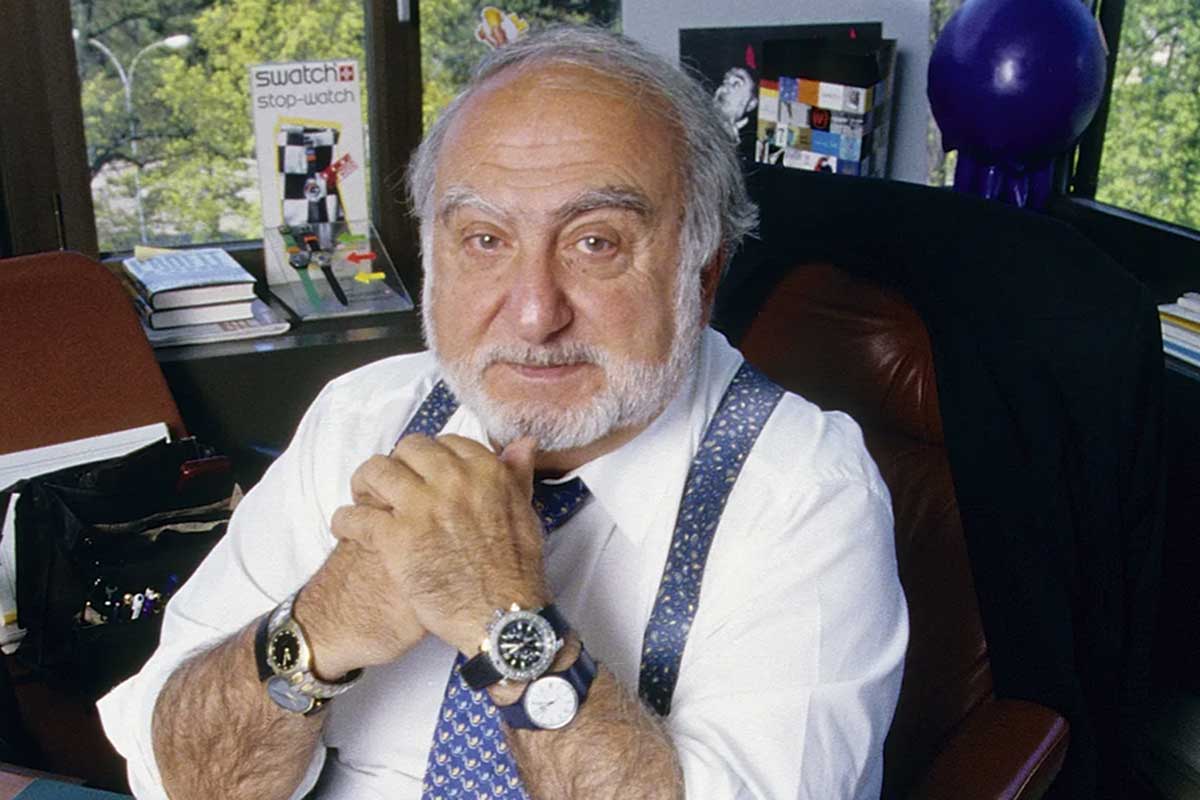
When discussing the pantheon of our industry’s greatest leaders, there is one individual that even his fiercest competitors have to defer to and that is Nicolas G. Hayek. One could even make the argument that without his actions in the ’80s to save Swiss watchmaking, the industry today would only be a pale shadow of itself. How was Hayek able to compete with watches from Citizen and Seiko? As a master of efficiency, he realized that in that price category, a viable watch could only be made in Switzerland if its labor costs were less than 10 percent. In an interview with Harvard Business School, he explained that SMH had to bring its production costs down to Asian levels. He said, “If we can design a manufacturing process in which direct labor accounts for less than 10 percent of total costs, there is nothing to stop us from building a product in Switzerland, the most expensive country in the world.”
Determined to resurrect the Swiss industry, he used a design by engineers Ernst Thomke, Elmar Mock and Jacques Muller to compete with Asian watchmakers by radically simplifying watch construction. As an example, the Swatch Group’s quartz watch would comprise only 51 parts. Introduced in Zurich in 1983, Hayek didn’t so much as create a watch but he ignited a revolution that would result in the Swatch Group dominating the entry-level market and, most importantly, filling the entire industry with hope. While Swatch watches differed immensely from high watchmaking like Blancpain, which Hayek would acquire in 1992, it provided a sense of generational optimism that had been missing from the decade before, thanks to re-employing a workforce that was in dire threat of going extinct. The bright, poppy Swatch watches also pioneered contemporary culture collaborations with artists like Keith Haring and soon became the industrial backbone for the mighty Swatch Group.
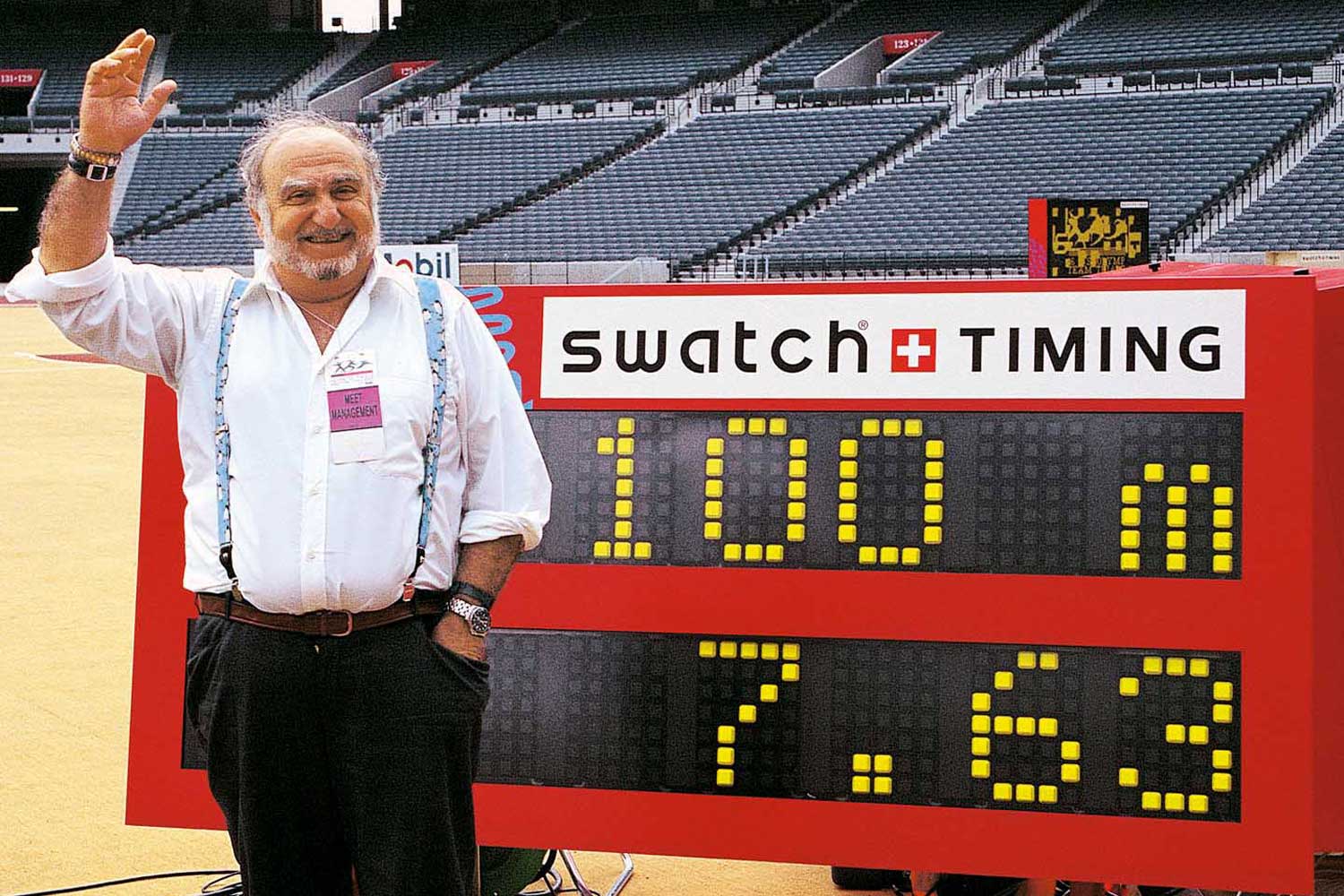
Nicolas G. Hayek
While Hayek was clearly a mastermind of marketing entry-level timepieces, his passion was for the high end, and his ultimate prize was the world’s most fabled name in watchmaking, Breguet. In 1999, a high-stakes competition began between Hayek and Johann Rupert to create the world’s biggest luxury watch group. But Breguet, which Hayek successfully purchased that year, was a name unlike any other. Such was his passion for the maison that Hayek appointed himself president while also simultaneously running his group. Breguet in the early 2000s was on fire, proving itself to be one of the most innovative brands on the planet.
Hayek’s two greatest achievements were the following. First, he led the re-creation of Abraham-Louis Breguet’s most complicated watch, the Marie Antoinette, and this was undertaken with no reference to the original, which was at the time missing. Incredibly, now that the original has been recovered, the two watches have proven to be almost identical. The second in 2005 was the unveiling of La Tradition, which is to my mind the single most imitated watch today by young independent watchmakers.
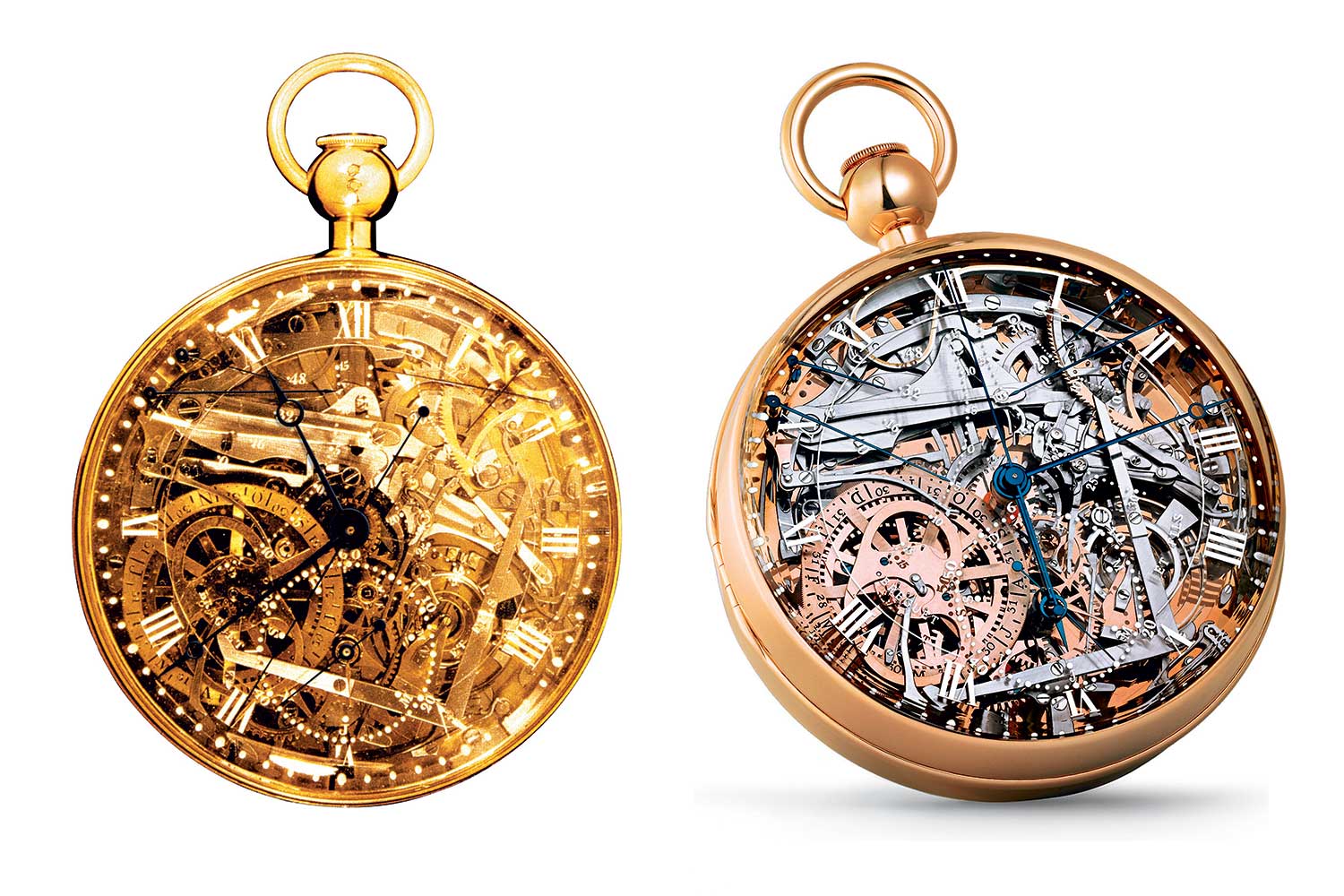
(From left) The Original Marie-Antoinette pocket watch reference 160; Breguet reference 1160 crafted as a tribute to the stolen watch is accurate to the original

Breguet Tradition Quantième Retrograde 7597 in rose gold
You may also like
Limited Edition
An Artistic Evolution
Dec 29, 2025
Limited Edition
An Artistic Evolution
Dec 29, 2025
News
Long Live the Watch Nerds
Dec 24, 2025
News
Long Live the Watch Nerds
Dec 24, 2025
Editorial
Holiday Horology: Something Old, Something New, Something Special — Joyceline Tully, Revolution Asia Editor-in-Chief
Dec 20, 2025
Editorial
Holiday Horology: Something Old, Something New, Something Special — Joyceline Tully, Revolution Asia Editor-in-Chief
Dec 20, 2025